

HONG KONG: With or without 3-D glasses, a newly released video tour of Ceres offers a new perspective on the dwarf planet’s dramatic and diverse surface.
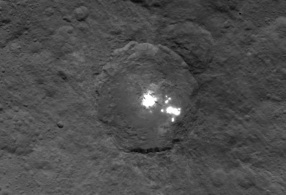
The new Ceres video tour, which was compiled from images gathered by NASA’s orbiting Dawn spacecraft, scopes out the mysterious bright spots at the bottom of the dwarf planet’s 2-mile-deep (3.2 kilometers) Occator crater and a 4-mile-high (6.4 km) mountain scientists are calling “The Pyramid.”
With or without 3-D glasses, a newly released video tour of Ceres offers a new perspective on the dwarf planet’s dramatic and diverse surface.
The new Ceres video tour, which was compiled from images gathered by NASA’s orbiting Dawn spacecraft, scopes out the mysterious bright spots at the bottom of the dwarf planet’s 2-mile-deep (3.2 kilometers) Occator crater and a 4-mile-high (6.4 km) mountain scientists are calling “The Pyramid.”
“This mountain is among the tallest features we’ve seen on Ceres to date,” Dawn science team member Paul Schenk, a geologist at the Lunar and Planetary Institute in Houston, said in a statement. “It’s unusual that it’s not associated with a crater. Why is it sitting in the middle of nowhere? We don’t know yet, but we may find out with closer observations.”

Karachi Port sets 138-year cargo handling record
KARACHI: Pakistan's maritime sector has achieved a major milestone as Karachi Port set a new record in its 138-year history...