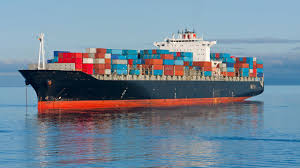
WASHINGTON: Cargo handling operations at the nation’s ports are at a low ebb, as cargo throughputs have fallen below the Guaranteed Minimum Tonnage (GMT). The benchmark was captured in the agreement entered by the Federal Government and the concessionaires 10 years ago. Cargo throughput refers to the total volume of cargo (inward and outward) handled at the ports nationwide. The low cargo volume is an indication of an ailing economy where manufacturing and businesses struggle to survive. The multi-billion naira cranes and equipment, which dot the various ports, are now mostly idle, indicative of the uncertainty over investments and returns likewise. Consequently, terminal operators across the six major seaports in the country have decried the negative impact, as almost 80 per cent of the clearing agents have closed shop with the attendant job loss conservatively put at 30,000.
Nigerian Ports Authority (NPA) operational statistics reveal a downward throughput of vessels in the last six years (excluding crude oil) from 76.7 million tonnes in 2010 to 83.4 million tonnes in 2011, and further down to 77 million tonnes in 2012. Volume picked up a little bit in 2013 to 78.2 million tonnes and higher to 84.9 million tonnes in 2014. But it fell again to 77.3 million tonnes in 2015 and down to paltry 53.2 million tonnes in 2016. Reacting to the development, the spokesman for Seaports Terminal Operators Association of Nigeria (STOAN), Bolaji Akinola, noted that most of the terminals nationwide were operating half their capacities. According to him, the facilities now operate far below the GMT (which varies according to terminals’ capacities) because government policies have allegedly paralysed activities at the ports.
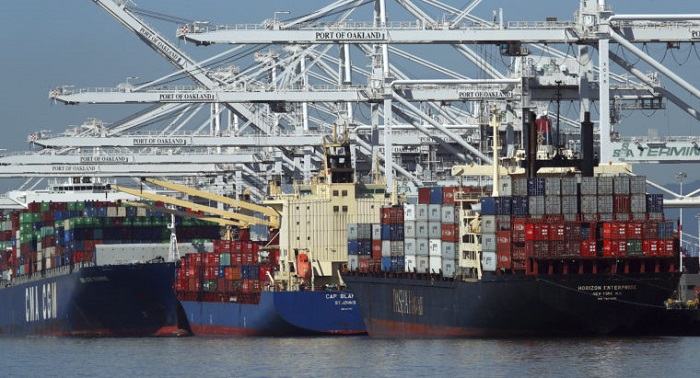

The situation, Akinola stressed, was not envisaged at the time of signing the concession agreement, adding that the development now poses a serious threat to the earnings of the operators. He, therefore, urged the Federal Government to urgently reverse the trend. His words: “The drop in cargo volume has been as a result of some anti-trade policies of the past administration. The imposition of 70 per cent tariff on imported vehicles and the hike in import duty of rice contributed to depriving our ports of much needed cargoes. The Central Bank of Nigeria (CBN) also compounded the situation by barring the importers of certain items from accessing the official foreign exchange platform. The ports are bleeding as a result of these policies.” The harsh business atmosphere notwithstanding, he restated the commitment of the terminal operators to fulfilling their own part of the bargain.
Akinola went on: “This is evident in the massive investments by operators at the ports. The various terminals under concession have witnessed tremendous upgrade. Unlike what obtained in the pre-concession era, modern cargo handling equipment has been installed at the facilities. Workers are now better trained to perform their jobs. We have invested more than $1 billion, and this has turned the ports around. There is no more congestion, and there was a significant increase in cargo volume before the policies that took the volume away were introduced in 2013/2014. Our ports are much better.” In confirmation of his claim, data from the National Bureau of Statistics (NBS), show that the total number of cargoes in and out of all the ports increased from 78,281,634 in 2013 to 84,900,588 in 2014, but later dropped to 78,322,558 and 70,681,028 in 2015 and 2016. The number of inward cargoes also rose from 50,005,603 in 2013 to 53,773,526 in 2014 before dipping in 2015 and 2016. Also, outward cargoes increased from 28,276,031 in 2013 to 31,127,062 in 2014 and thereafter diminished to 29,019,349 in 2015, and 26,912,130 in 2016.