Customs Today
  • Home
  • Islamabad
  • Karachi
  • Lahore
  • National
  • Transfers and Postings
  • Chambers & Associations
  • Business
No Result
View All Result
Customs Today
  • Home
  • Islamabad
  • Karachi
  • Lahore
  • National
  • Transfers and Postings
  • Chambers & Associations
  • Business
No Result
View All Result
Customs Today
No Result
View All Result
Home Science & Technology Science

Earth-like planet probably being blasted with radiation

bySana Anwar
19/11/2015
in Science, Science & Technology
Share on FacebookShare on Twitter

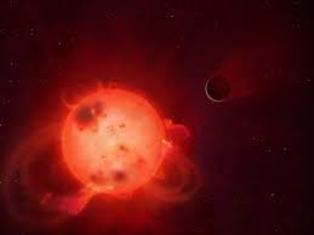
CANADA: According to a new study, the most Earth-like planet on our radar has one decidedly un-Earth-like feature: It’s super radioactive.

The research, published Tuesday in the Monthly Notices of the Royal Astronomical Society, reveals the inconvenient truth about Kepler-438b, an exoplanet first unveiled back in January.


You might also like

Tesla driverless system to use updated radar technology

12/09/2016

Apple to develop its own self-driving technology

10/09/2016

Kepler-438b is only 12 percent bigger than Earth in diameter, and scientists gave it a 70 percent chance of being rocky like our own world. Scientists were further tantalized by its distance from its host star, Kepler-438. Kepler-438b is a red dwarf chillier than our own sun, but the exoplanet in question is close enough to its star that it boasts a 70 percent chance of holding liquid water – or having the right temperature to hold it, anyway.

But it turns out that the star is ejecting superflares 10 times as powerful as any solar flare ever recorded in our own system. The flares carry the energy of 100 billion megatons of TNT, and they happen regularly, at least once every few hundred days.

Not exactly a pleasant vacation spot.

The real concern is that these flares might carry coronal mass ejections with them. When our own sun flares up, it sends out bursts of plasma and magnetic field. Our own planet’s magnetic field protects us from most of the ill effects of such energetic particles, but others might not be so lucky. In fact, research now indicates that Mars lost its lush, warm climate of old because it lacked the magnetic field to protect itself from the sun’s emissions.

“If the planet, Kepler-438b, has a magnetic field like the Earth, it may be shielded from some of the effects,” lead researcher David Armstrong of the University of Warwick said in a statement. “However, if it does not, or the flares are strong enough, it could have lost its atmosphere, be irradiated by extra dangerous radiation and be a much harsher place for life to exist.”


Related Stories

Tesla driverless system to use updated radar technology

byCT Report
12/09/2016

WASHINGTON: Electric carmaker Tesla announced Sunday it was upgrading its Autopilot software to use more advanced radar technology. In a...

Apple to develop its own self-driving technology

byCT Report
10/09/2016

SAN FRANCISCO: Apple may not become an automaker, but it still wants to develop its own self-driving technology. The iPhone-maker's...

NASA spots slowest known magnetar

byCT Report
10/09/2016

WASHINGTON: Astronomers have found evidence of a magnetar - magnetised neutron star - that spins much slower than the slowest...

‘YouTubers’ outshining old-school television

byCT Report
09/08/2016

SAN FRANCISCO: A media revolution is taking place, and most people over 35 years of age aren’t tuned in. Millennial...

Next Post

Indian authorities seize smuggled tabacco products worth Rs. 10m

  • Terms and Conditions
  • Disclaimer

© 2011 Customs Today -World's first newspaper on customs. Customs Today.

No Result
View All Result
  • Transfers and Postings
  • Latest News
  • Karachi
  • Islamabad
  • Lahore
  • National
  • Chambers & Associations
  • Business
  • About Us

© 2011 Customs Today -World's first newspaper on customs. Customs Today.