

Customs Today
  • Home
  • Islamabad
  • Karachi
  • Lahore
  • National
  • Transfers and Postings
  • Chambers & Associations
  • Business
No Result
View All Result
Customs Today
  • Home
  • Islamabad
  • Karachi
  • Lahore
  • National
  • Transfers and Postings
  • Chambers & Associations
  • Business
No Result
View All Result
Customs Today
No Result
View All Result
Home Science & Technology Science

Earth-like worlds are yet to be born: NASA

byCustoms Today Report
21/10/2015
in Science, Science & Technology
Share on FacebookShare on Twitter

You might also like

Tesla driverless system to use updated radar technology

12/09/2016

Apple to develop its own self-driving technology

10/09/2016

HONG KONG: SINCE 2009, NASA has been using the Kepler space observatory to survey our region of the Milky Way in the hope of finding an Earth-like planet suitable for humans.
And the space agency has had some luck with its search — most notably the recent discovery of Earth’s bigger, older cousin, Kepler 452.
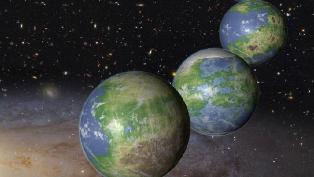
However, a theoretical study from the Space Telescope Science Institute (STScI) in Baltimore suggests we may be wasting our time as most Earth-like worlds are yet to be born.
An assessment of data collected by NASA’s Hubble Space Telescope and Kepler space observatory revealed only eight per cent of the potentially habitable planets that will ever form in the universe have existed since the inception of our solar system some 4.6 billion years ago.
Co-Author of the study Peter Behroozi said he expects the remainder of the planets to form until the sun burns out in 6 billion years.
“Our main motivation was understanding the Earth’s place in the context of the rest of the universe,” he said in a statement released by NASA.
“Compared to all the planets that will ever form in the universe, the Earth is actually quite early.”
With data from the Hubble Space Telescope giving astronomers a “family album” of galaxy observations, they have been able to determine the universe was creating stars very quickly 10 billion years ago.
Co-author Molly Peeples said while this process has since slowed, there is still so much hydrogen and helium gas in the universe to ensure new stars and planets will be made for a very long time.

Related Stories

Tesla driverless system to use updated radar technology

byCT Report
12/09/2016

WASHINGTON: Electric carmaker Tesla announced Sunday it was upgrading its Autopilot software to use more advanced radar technology. In a...

Apple to develop its own self-driving technology

byCT Report
10/09/2016

SAN FRANCISCO: Apple may not become an automaker, but it still wants to develop its own self-driving technology. The iPhone-maker's...

NASA spots slowest known magnetar

byCT Report
10/09/2016

WASHINGTON: Astronomers have found evidence of a magnetar - magnetised neutron star - that spins much slower than the slowest...

‘YouTubers’ outshining old-school television

byCT Report
09/08/2016

SAN FRANCISCO: A media revolution is taking place, and most people over 35 years of age aren’t tuned in. Millennial...

Next Post

APRA AMCOS revenue surges by 6.4% to $218m

  • Terms and Conditions
  • Disclaimer

© 2011 Customs Today -World's first newspaper on customs. Customs Today.

No Result
View All Result
  • Transfers and Postings
  • Latest News
  • Karachi
  • Islamabad
  • Lahore
  • National
  • Chambers & Associations
  • Business
  • About Us

© 2011 Customs Today -World's first newspaper on customs. Customs Today.