Customs Today
  • Home
  • Islamabad
  • Karachi
  • Lahore
  • National
  • Transfers and Postings
  • Chambers & Associations
  • Business
No Result
View All Result
Customs Today
  • Home
  • Islamabad
  • Karachi
  • Lahore
  • National
  • Transfers and Postings
  • Chambers & Associations
  • Business
No Result
View All Result
Customs Today
No Result
View All Result
Home Science & Technology Science

Earth’s early Ecosystem more complex, scientists

bySana Anwar
04/12/2015
in Science, Science & Technology
Share on FacebookShare on Twitter

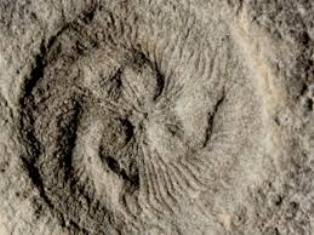
CANADA: Analysis of a 555-million-year-old fossil of an extinct organism has revealed that the first large, complex creatures that roamed the Earth likely created more complicated ecosystems than what was initially believed by scientists.

Dr. Imran Rahman, a researcher from the University of Bristol in the United Kingdom, teamed up with other scientists from the United States and Canada to carry out examinations on the remains of an ancient marine organism called Tribrachidium.


You might also like

Tesla driverless system to use updated radar technology

12/09/2016

Apple to develop its own self-driving technology

10/09/2016

The research team made use of scientific models known as computational fluid dynamics (CFD) to simulate how the extinct creature was able to feed on tiny particles found in the water.

This is the first instance where this unusual feeding behavior, which is called suspension feeding, has been observed from species of this time period.

Scientists believe that Tribrachidium existed during the Ediacaran era, around 541 million to 635 million years ago. Many large and complex creatures that lived in this period do not have clear associations with modern day organisms.

Ediacaran organisms were initially thought to only be capable of forming simple ecosystems consisting of a few modes of feeding. The new study, however, suggests that these creatures instead can feed in a number of ways than what was previously considered.

Vanderbilt University professor and study co-author Dr. Simon Darroch explained that researchers originally thought that the very first complex organisms on Earth knew how to feed in only one or two ways.

Their study discovered that Tribrachidium and possibly other creatures from the period as well knew how to carry out suspension feeding. This provides evidence that early ecosystems on the planet were actually more complex than in initial theories.


Related Stories

Tesla driverless system to use updated radar technology

byCT Report
12/09/2016

WASHINGTON: Electric carmaker Tesla announced Sunday it was upgrading its Autopilot software to use more advanced radar technology. In a...

Apple to develop its own self-driving technology

byCT Report
10/09/2016

SAN FRANCISCO: Apple may not become an automaker, but it still wants to develop its own self-driving technology. The iPhone-maker's...

NASA spots slowest known magnetar

byCT Report
10/09/2016

WASHINGTON: Astronomers have found evidence of a magnetar - magnetised neutron star - that spins much slower than the slowest...

‘YouTubers’ outshining old-school television

byCT Report
09/08/2016

SAN FRANCISCO: A media revolution is taking place, and most people over 35 years of age aren’t tuned in. Millennial...

Next Post

Hong Kong stocks plunge by break, Hang Seng drops 1.1pc

  • Terms and Conditions
  • Disclaimer

© 2011 Customs Today -World's first newspaper on customs. Customs Today.

No Result
View All Result
  • Transfers and Postings
  • Latest News
  • Karachi
  • Islamabad
  • Lahore
  • National
  • Chambers & Associations
  • Business
  • About Us

© 2011 Customs Today -World's first newspaper on customs. Customs Today.