ISLAMABAD: Finance Minister Muhammad Aurangzeb emphasized the importance of sustained monitoring and enhanced coordination among relevant agencies, as well as timely interventions to safeguard the purchasing power of the public and ensure overall price stability amidst rising inflation.
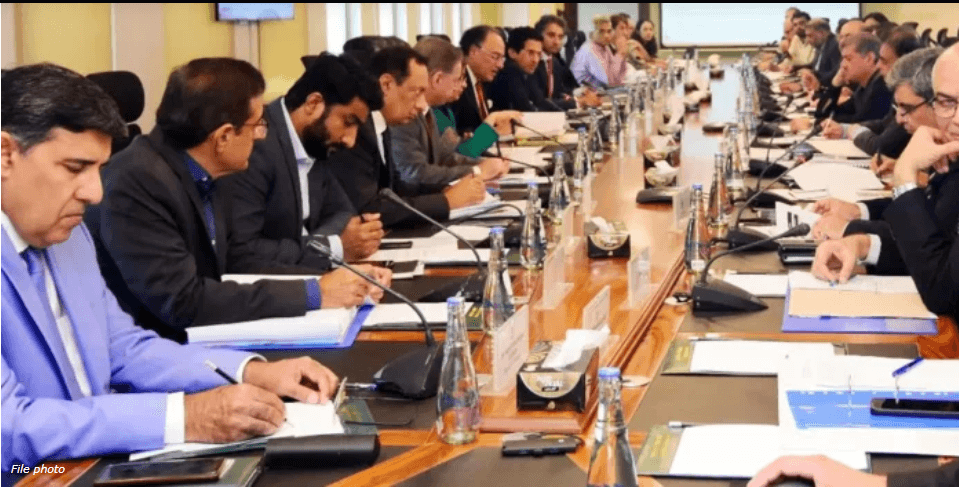
A meeting of the Economic Coordination Committee (ECC) of the federal cabinet, chaired by Aurangzeb, was informed that inflation had remained moderate before this year’s floods but had climbed to 5.6% in September due to disruptions in the supply chain caused by damages to agricultural land and livestock.

According to Planning Ministry Chief Economist Imtiaz Ahmad, the Sensitive Price Index had similarly risen through October.
Citing data from the Pakistan Bureau of Statistics (PBS), he said some essential items such as chicken, rice, and LPG had recorded a decline, but prices of key commodities such as sugar, beef, cooking oil, and ghee had registered increases.
Ahmad briefed the ECC on policy measures proposed by the National Price Monitoring Committee to contain inflation, including a sensitivity analysis of global price impacts, enhanced coordination among federal and provincial agencies to address supply gaps, and targeted agricultural credit for farmers in flood-affected districts. He said the Competition Commission of Pakistan was also examining possible cartelization in the edible oil and ghee sectors.
The chief economist said preparations were already underway for a comprehensive Ramzan price stabilization plan and provinces were being encouraged to utilize the PBS Decision Support System for improved market monitoring and price oversight.
The finance minister appreciated the comprehensive analysis and directed all ministries concerned and provincial authorities to ensure effective implementation of the recommended measures for price stabilization and inflation control.
Key decisions
During its meeting, the ECC reviewed a proposal from the Commerce Ministry for improving the Pre-Shipment Inspection framework under the Import Policy Order 2022 and approved measures to allow accredited and registered PSI agencies to conduct inspections in line with policy.
The ECC also considered a summary submitted by the Commerce Division for proposed amendments to the procedure for import of vehicles under the Personal Baggage, Transfer of Residence, and Gift Schemes (Appendix-E) of the Import Policy Order, 2022. After detailed deliberations on various aspects of the proposal, the ECC directed the Commerce Division to undertake further consultations with relevant stakeholders and resubmit the proposal.
The cabinet body reviewed another proposal from the Commerce Ministry on the import and export policy for precious metals and jewelry, approving continuation of the existing framework with enhanced transparency and automation measures to improve efficiency and traceability.
The ECC also considered two summaries presented by the Defense Division, approving a technical supplementary grant of Rs. 2.5 billion for the establishment of the Pakistan Maritime Science and Technology Park under the Pakistan Navy. It also approved another technical supplementary grant equivalent to AED45 million available in rupee cover with the Frontier Works Organization to settle an overdraft facility utilized for FWO’s overseas construction operations in the United Arab Emirates.
The Election Commission of Pakistan approached the ECC for a technical supplementary grant of Rs. 455.984 million to meet expenditures related to the conduct of local body polls during FY2025–26, which was approved. Similarly, a Finance Division request for a grant of Rs. 112.118 million for the installation of individual electricity meters in the Pakistan Mint Residential Colony was approved.
The ECC also considered and approved a summary from the Ministry of Interior and Narcotics Control for a grant of Rs. 21.5 million for the procurement of spare parts for helicopter maintenance by Headquarters Pakistan Rangers (Punjab) during the current fiscal year.