ISLAMABAD: Finance Secretary Waqar Masood has said that economic growth is projected to continue its upward acceleration for the current fiscal year.
“The GDP growth target has been set at 5.5 percent with contribution of the agriculture 3.9 percent, industry 6.4 percent and services 5.percent,” he observed while briefing the National Assembly Standing Committee on Finance and Revenue. He said that midterm budgetary framework had set timelines for achieving high growth rates gradually steering it to over 7.0 percent by 2017-18.
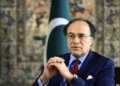

He said that Pakistan’s economy did reasonably well during FY15, in contrast to a number of other emerging economies that are facing slower economic growth. The real GDP growth increased to 4.2 percent in FY15, and key macroeconomic indicators like inflation, fiscal balance and current account balance recorded improvements.
He emphasized on the improvement in the external sector given its significant positive spill over to the rest of the economy. The external account improved due to a robust growth in worker remittances and a sharp decline in global oil prices.
As a result, not only country’s FX reserves reached an all-time high level of US$ 18.7 billion by end-June 2015 (sufficient to finance around 5 months of the country’s import bill), the exchange rate also remained stable during the year. More importantly, the improvement in the external account significantly diluted the global risk perception for Pakistan.
Waqar Masood further explained before the committee that the stable PKR parity kept CPI inflation under control, and lowered inflation expectations in the country. However, the significant reduction in CPI inflation during FY15 was caused primarily by a sharp decline in oil and other commodity prices.
The average CPI inflation fell from 8.6 percent last year, to only 4.5 percent in FY15. A stable outlook of inflation and balance of payments allowed policymakers to implement pro-growth strategies. For example, SBP cut its policy rate by a cumulative 350 bps during the year to boost investment activities.
Similarly, on the fiscal side, he observed development expenditures by the government remained strong through most of the year, focusing mainly on infrastructure development. He recognized that the fiscal consolidation efforts of the government in terms of controlling expenditure, it also points out structural weaknesses in tax collection.
A sharp decline in oil prices and subdued manufacturing activities during the year had made already sluggish tax collections more difficult. The provincial budget surplus also recorded lower than the last year. In order to finance the budget deficit, the government relied heavily on commercial banks. Redeeming feature has been the increase in long term financing which indicates new investment in plant and machinery. Nevertheless, the overall credit to private sector remained lower than that in the previous year.
According to Finance Secretary, country was able to marginally reduce its public-debt-to-GDP ratio mainly due to revaluation gain from US Dollar appreciation against major currencies. The reduction in debt burden was realized despite the successful launch of 5-year Sukuk bond in November 2014, which allowed the government to raise US$ 1.0 billion against the initial target of US$ 500 million.
While the report welcomes positive developments in the economy, it reiterates several long-standing structural constraints (for example, low investment rate, low tax-to-GDP ratio, and continuing energy shortages) that continue to hinder a sharp economic recovery.