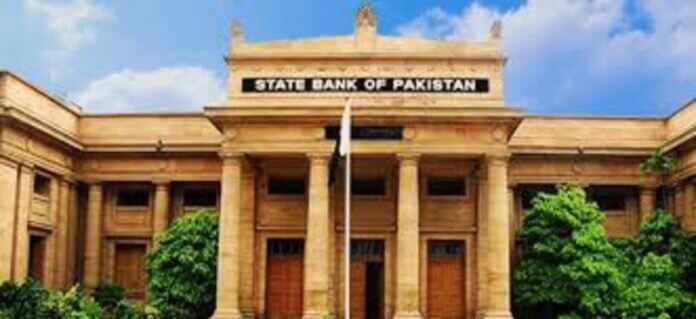
KARACHI: The State Bank of Pakistan (SBP) has released its annual report on the country’s economy for 2026, highlighting improvements in key economic indicators and resilience against domestic and global economic challenges.
According to the report, cautious monetary policy and economic reforms helped maintain stability during the fiscal year, while the outlook for 2027 points towards continued growth and a decline in inflation.


The SBP report states that all key economic indicators showed improvement during fiscal year 2026.
It noted that Pakistan’s economy demonstrated resilience despite facing domestic and international economic shocks, reflecting the impact of policy measures aimed at maintaining stability.
The report identified cautious monetary policy and economic reforms as important factors that helped support economic stability throughout the year.
GDP growth projected at 3.5% to 4.5% in 2027
Looking ahead, the State Bank expects Pakistan’s real gross domestic product (GDP) growth to remain between 3.5% and 4.5% in fiscal year 2027.
The projection indicates that the central bank expects economic activity to maintain a positive trajectory following the improvements recorded during FY2026.
The report noted that inflation remained close to the upper limit of the medium-term target range of 5% to 7% during 2026. However, the State Bank expects inflation to decline in fiscal year 2027 and move within the same medium-term target range.
The anticipated reduction in inflation is an important part of the economic outlook outlined in the annual report.
Current account deficit expected to remain under control
The SBP also projected that Pakistan’s current account deficit would remain between zero and 1% of GDP in fiscal year 2027.
The projection suggests that the external account is expected to remain within a relatively contained range during the coming fiscal year.
Overall, the report presents a cautiously positive outlook for Pakistan’s economy, with improved economic indicators in FY2026, projected GDP growth and expectations of lower inflation in FY2027.