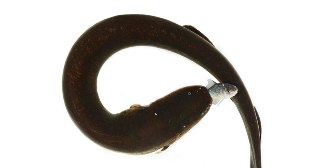
HARROW: The behavior is common in smaller eels when handling prey that are large relative to their size and in bigger eels when dealing with large fish.
Electric eels probably wouldn’t make most people’s list of the world’s most devious predators – but they should.


“It’s straight out of intro physics, it’s as if the electric eels took a class in physics and said, ‘hey, we’ve got a handle on this, ‘” Catania told The Post.
A study unveiled on Wednesday detailed how these unsafe denizens of the muddy waterways of South America’s Amazon and Orinoco basins can double the voltage of their jolts by curling their serpentine bodies to adjust the position of the positive and negative poles of their electric organ.
“What I like about these findings is they are inevitable and yet incredible”, Catania said.
“Historically, electric eels have been viewed as unsophisticated, primitive creatures that… shock their prey to death, but it turns out that they can manipulate their electric fields in an intricate fashion”, he says. Each of these produces a tiny voltage, but they have a combined discharge of up to 600 volts.
To envision how the eel uses its electric charge, try picturing the critter’s long, thin body as a skinny magnet. An eel’s electric organ, which is comprised of horizontal strands of nervous tissue running along the length of its body, generates an electric field inside the animal with the positive pole developing near the head and the negative occurring near the end of the tail, the team reports online today in Current Biology.
First, the study recorded several video images of eels engaged in curling and transmitting their shocks. The initial high voltage discharges partially incapacitate the prey, allowing the eel to approach and seize it. At this point, a captive fish would normally struggle to break free, but the eel curls its body to sandwich its prey between its head and tail. By doing this, they can take care of both large and wriggling prey or prey that is barely kept in their grip, such as crayfish, according to a release. An eel’s tail curl can double the strength of the electric field convulsing the prey. Further study showed that a shock of that size causes profound muscle fatigue and loss of contractile force in the prey.