KABUL: A battle wages at the original center of the War on Terror, one actually meant to enlighten and elevate the poorest of the oppressed poor but likely lining the pockets of the most corrupt on the front lines.
Much of Afghanistan is still in the dark, even 15 years after the Sept. 11, 2001 terror attacks sparked a concurrent U.S. invasion and revitalization plan which has spent billions while suffering untold delays due to equal doses of conflict, corruption and, sometimes, construction.

The first chapter of a report by the Special Inspector General for Afghanistan Reconstruction (SIGAR) is focused on the “power struggle” in electrifying the country amidst age-old violence and upheaval. This part of the July report received little attention at first glance but we at Electric Light & Power are revisiting it after SIGAR earlier this month released the first of its “Lessons Learned” updates indicating the entire reconstruction effort has fallen victim to repeated breakdowns in one of the world’s most corrupt political systems.
The 30-page section published in July, “Power Struggles: Electrifying Afghanistan,” underlines the hurdles facing those who want to connect most, if not all Afghans to some kind of power grid. Only one in three Afghans has that connection currently, while the country imports 80 percent of its electricity, according to the report.
“Per-capita consumption of electricity in Afghanistan is very low, at about 100 kW a year, according to an ADB (Asian Development Bank) energy assessment; that means the average Afghan’s total energy consumption is the equivalent of powering a 50-watt light bulb—but no other electrical gear—about five and a half hours a day for a year,” reads the SIGAR report.
The developed world is trying to help. Since fiscal 2002, the U.S. alone has obligated about $3 billion toward power-sector projects in Afghanistan, with remarkably little to show for it. Construction takes several times longer than planned and costs much more, if completed at all.
“Electrifying Afghanistan will continue to be a slow and hazardous process,” SIGAR concluded. “It requires not only cash and hard work, but also the prudential tasks of taking into account the historical record of delayed, troubled or failed projects; the physical, technical and financial constraints of the operational setting; the security and political environments; local capabilities to operate and maintain plants and equipment; and the probabilities of different risk scenarios.
“The cost and consequences of failed projects are too high, both for Afghan citizens and U.S. taxpayers, to assume that proposed energy projects have been fully vetted, assessed against local conditions, carefully selected and executed as intended,” the report charged. “Robust oversight will continue to be needed.”
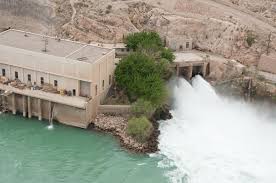
Without it or even with it, perhaps projects like the Salma Dam construction are common in Afghanistan. The SIGAR report opens with a vignette about the inauguration ceremony at that rebuilt dam which is supposed to produce about 42 MW of capacity.