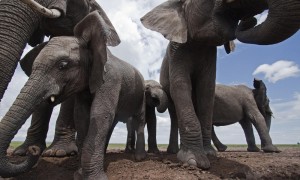
CHICAGO: Cancer is much less common in elephants than in humans, even though the bodies of jumbos have many more cells. That’s a paradox known among scientists, and now researchers think they may have an explanation which might lead to new ways to protect people from cancer.
Compared with just one copy in humans, elephants’ cells contain 20 copies of a major cancer-suppressing gene. The gene helps damaged cells repair themselves or self-destruct when exposed to cancer-causing substances. The findings aren’t proof that those extra p53 genes make elephants can cer-resistant, but if future research confirms it, scientists could try to develop drugs for humans that would mimic the effect. Dr Joshua Schiffman, a pediatric cancer specialist at the University of Utah who led one of the teams, began his research after hearing about Peto’s paradox, which refers to the fact that large animals, including elephants and whales, have comparatively low cancer rates even though they have many more cells than smaller species. Cancer involves uncontrolled cell growth.


Schiffman’s patients in clude children with incomp lete p53 genes because of a condition called Li-Fraume ni syndrome, which increa ses their chances of develo ping cancer. So, Schiffman so ught to find clues from the blood of eight elephants. The team compared how elephant cells reacted to radiation, compared with cells from 10 humans and 10 patients with Li-Fraumeni syndrome.
The elephant cells selfdestructed at twice the rate of healthy human cells and more than five times the rate of cells from patients with the syndrome. Cells that don’t self-repair or self-destruct when exposed to carcinogens become prone to developing cancer. While the research won’t lead to any immediate treatment for humans, progress against cancer can come “from unexpected directions,” said Dr Ted Gansler of American Cancer Society . Schiffman’s team also ana lyzed necropsy data and found that elephants sometimes live as long as humans, yet only about 1 in 20 die of cancer, versus about 1in 4 humans.