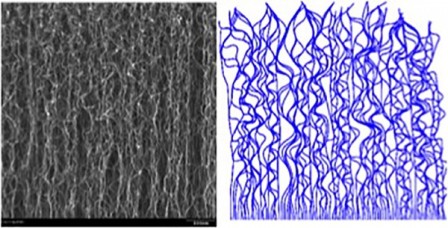


BRENT: Engineers grow carbon nanotube “forests” in high-temperature furnaces, but the forces involved are unpredictable and mostly left to chance.
A new study suggests there’s a way to predict how the structures, which are much smaller than the width of a human hair, form. Knowing this could make it possible to use them in a wide range of products—from baseball bats to body armor.
Forests of carbon nanotubes (CNTs) are held together by an adhesive force known as the van der Waals force. They’re categorized based on their rigidity or how they are aligned.
For example, if CNTs are dense and well aligned, the material tends to be more rigid and can be useful for electrical and mechanical applications. If CNTs are disorganized, they tend to be softer and have entirely different sets of properties.

Karachi Port sets 138-year cargo handling record
KARACHI: Pakistan's maritime sector has achieved a major milestone as Karachi Port set a new record in its 138-year history...