
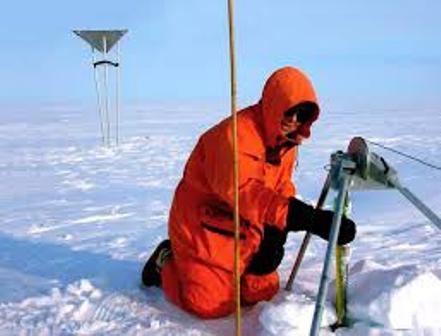


PARIS: An increased volume of Arctic sea ice has been detected in Canada despite the lowest winter extent recorded in the country, according to a recent satellite report.
The European Space Agency (ESA) unveiled the results of their five-year CryoSat satellite mission, revealing that the Arctic floes monitored in the north have become thicker by an average of 9.8 inches, or 17 percent, compared to the thinnest winter ice the agency detected in the region in 2013.
Imaging from the satellite showed a large portion of the Beaufort Sea was covered in ice. This area registered as bare water on the map based on the results from eight years ago.
The CryoSat satellite carried a radar altimeter designed to ‘see’ through clouds and even in the dark in order to provide continuous measurements the thickness of the polar ice.
Experts from the Centre for Polar Observation and Modelling (CPOM) in the United Kingdom provided specialist data processing to create a comprehensive report of the findings published in the CPOM’s official Cryosat website.

Karachi Port sets 138-year cargo handling record
KARACHI: Pakistan's maritime sector has achieved a major milestone as Karachi Port set a new record in its 138-year history...


