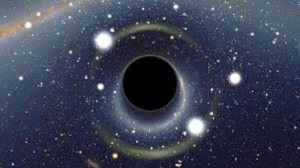


CANADA: Astronomers using ESA’s Herschel space observatory have found that the winds blowing from a huge black hole are sweeping away its host galaxy’s reservoir of raw star-building material. Found at the hearts of most galaxies, supermassive black holes are extremely dense and compact objects with masses between millions and billions of times that of our Sun.
Many are relatively passive, like the one sitting at the centre of our Milky Way. However, some of them are devouring their surroundings with a great appetite.
These active black holes not only feed on nearby gas but also expel some of it as powerful winds and jets. Astronomers have long suspected these outflows to be responsible for draining galaxies of their interstellar gas, in particular the gas molecules from which stars are born. This could eventually affect a galaxy’s star-forming activity, slowing it down or possibly quenching it entirely.
Until now, it had not been possible to capture a complete view of this process. While astronomers were able to detect winds very close to black holes using X-ray telescopes, and to trace much larger galactic outflows of gas molecules through infrared observations, they had not succeeded at finding both in the same galaxy.
A new study has changed the scene, detecting winds driven by one particular black hole from the smallest to largest scales.
“This is the first time that we have seen a supermassive black hole in action, blowing away the galaxy’s reservoir of star-making gas,” explains Francesco Tombesi from NASA’s Goddard Space Flight Center and the University of Maryland, USA, who led the research published this week in Nature.

Karachi Port sets 138-year cargo handling record
KARACHI: Pakistan's maritime sector has achieved a major milestone as Karachi Port set a new record in its 138-year history...