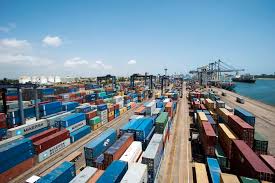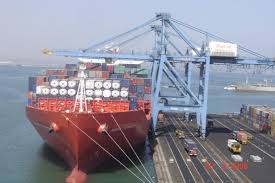
DJIBOUTI CITY: Bags of wheat speed down multiple conveyor belts to be heaved onto trucks lined up during the middle of a blisteringly hot afternoon beside the busy docks of Djibouti Port. Once loaded, the trucks set off westward toward Ethiopia carrying food aid to help with its worst drought for decades. With crop failures ranging from 50 to 90 percent in parts of the country, Ethiopia, sub-Saharan Africa’s biggest wheat consumer, was forced to seek international tenders and drastically increase wheat purchases to tackle food shortages effecting at least 10 million people.
This resulted in extra ships coming to the already busy port city of Djibouti, and despite the hive of activity and efforts of multitudes of workers, the ships aren’t being unloaded fast enough. The result: a bottleneck with ships stuck out in the bay unable to berth to unload. “We received ships carrying aid cargo and carrying fertilizer at the same time, and deciding which to give priority to was a challenge,” says Aboubaker Omar, chairman and CEO of Djibouti Ports and Free Zones Authority (DPFZA). “If you give priority to food aid, which is understandable, then you are going to face a problem with the next crop if you don’t get fertilizer to farmers on time.”

Since mid-June until this month, Ethiopian farmers have been planting crops for the main cropping season that begins in September. At the same time, the United Nations’ Food and Agriculture Organization has been working with the Ethiopian government to help farmers sow their fields and prevent drought-hit areas of the country from falling deeper into hunger and food insecurity.
Spring rains that arrived earlier this year, coupled with ongoing summer rains, should increase the chances of more successful harvests, but that doesn’t reduce the need for food aid now—and into the future, at least for the short term. “The production cycle is long,” says FAO’s Ethiopia country representative Amadou Allahoury. “The current seeds planted in June and July will only produce in September and October, so therefore the food shortage remains high despite the rain.”