
BERLIN: EU agriculture ministers were almost unanimous in expressing their scepticism about a European Commission proposal to give individual member states the power to ban the use of genetically modified (GM) ingredients in human and animal food.
Minister after minister at a meeting in Brussels criticised the commission’s proposal as incomplete, impractical, or unnecessary.
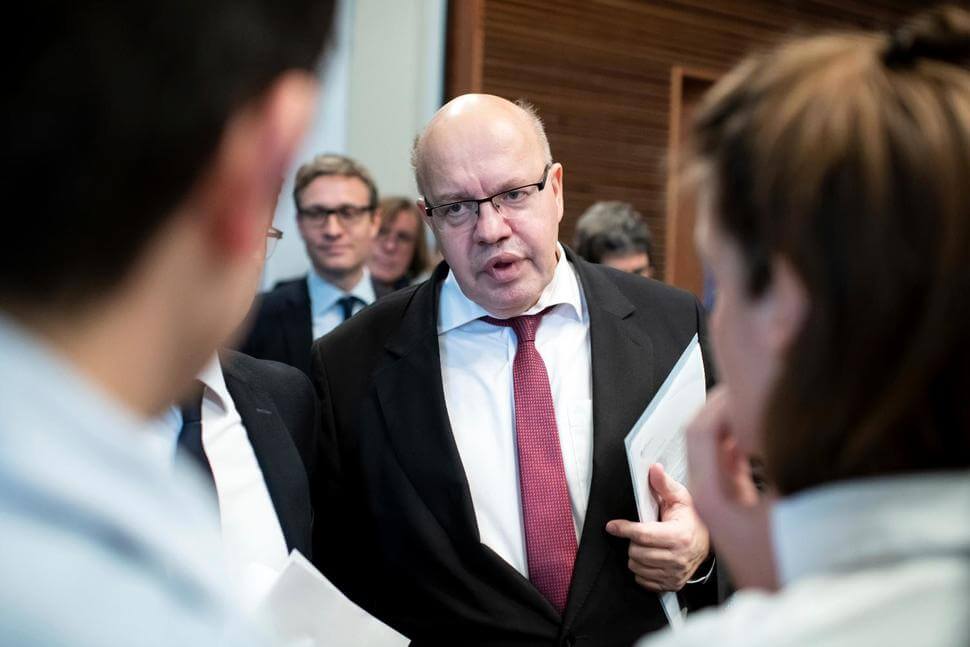
“The proposal has created more questions than provided solutions”, said German deputy food and agriculture minister Robert Kloos, adding the proposed GM opt-out “is neither practical nor legally sound”.
His British colleague, George Eustice, said he did not understand how the proposed powers could work “in practice” without violating internal market rules.
It’s not useful, it’s impracticable, and it’s likely to bring a large majority against it”, said French diplomat Alexis Dutertre on behalf of his minister.
In what was one of the few compliments for food safety commissioner Vytenis Andriukaitis that afternoon, Austrian minister Andra Rupprechter told him: “You have done your best to defend this indefensible proposal.”
Genetically modified organisms (GMOs) can only be imported into the EU if they have an EU-wide stamp of approval. The commission grants those permits based on a scientific assessment by the European Food Safety Authority (Efsa), and a vote by member states.
However, GMOs are such a divisive issue in Europe that countries rarely reach a qualified majority in favour or opposed to the authorisation of one.
EU rules state that in that case the commission takes the decision, which in practice means it also takes the public flak with GMOs a highly controversial topic in some member states.
The commission has argued that it would be more democratic if individual member states could ban the use of a GMO, even if it has been approved on EU level.
The idea here is to pass the buck to member states”, said Dutertre.
Ministers also raised questions about how the proposals would be implemented. While the plan would give countries the power to ban the use of GMOs, they would not be able to stop their import because of EU single market rules.
“How are we supposed to enforce this? When will I know that a GMO is being transported through my country? This is a purely practical question, which shows that [the proposal] is unworkable”, said Dutch minister Sharon Dijksma.
I would like to see more arguments from the commission on how they see the practical possibilities to prove that a restriction is in line with EU law and trade commitments”, noted Lithuanian minister Virginija Baltraitiene.
“We need to have clarification of the term ‘use’. It needs to have the same meaning through out the EU”, added her Greek colleague deputy minister Evangelos Apostolou.
Many ministers asked why the commission did not provide an impact assessment of the proposal.
But Andriukaitis said that it was “neither possible nor relevant” to assess the proposal’s impact, because it depends “on many factors that cannot be anticipated, such as how many member states will use the provisions”.
The European Parliament has also strongly criticised the proposal, making it highly unlikely that the plan will make it into law.
Nevertheless, after receiving his verbal pounding, Andriukaitis tried once more to persuade member states that the proposal “better fits with your genuine needs” than the status quo.
Should you choose not to support this approach, the commission would have no choice but to continue to authorise GMOs found safe by Efsa, to fulfil its legal obligation … I appeal to ministers once again to engage on constructive discussion on this legislative proposal”, he added.