ISLAMABAD: Caretaker Federal Minister for Privatization, Fawad Hasan Fawad highlighted the flaws in the country’s taxation system by informing that around 93 percent of the collected tax revenue is either voluntary or withholding; whereas, only 7 percent is actually collected by the Federal Board of Revenue (FBR).
Mr. Fawad Hasan Fawad informed the audience that the current state of the public sector is unsustainable and contributes to the deterioration in the business environment in the country, according to a press release issued here.
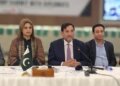

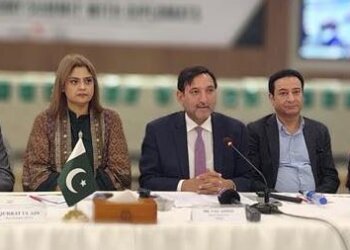
Federal Minister for Privatization, Fawad Hasan Fawad, said this while speaking at the 3rd “Pakistan Prosperity Forum” organized by the Policy Research Institute of Market Economy (PRIME).
In 3 years from 2018-2021, the government spent Rs. 2.54 trillion in terms of subsidies, grants, and loans to keep commercial SOEs operational, he said.
He informed that the size of the government has increased by more than three times in the last couple of decades.
Fawad said that moreover, FBR sends recovery notices to individuals worth billions of rupees while the actual collection is a mere few hundred million.
Since 2016, the tax burden on corporate taxpayers has increased by more than 40 percent on average, he said.
Such a burden has contributed to encouraging people to stay out of the tax system and corporatization.
The public sector reforms should include bureaucratic reforms and taxation system reforms. These two areas are crucial for improving the performance of the state.
He stressed that the reform should not increase in the size of the federal and provincial governments, and the power of state functionaries.
The Minister said the reforms also need to focus on building the state’s capacity to regulate markets from where the government exists and the private sector takes over.
He said the taxation system of Pakistan not only incentivizes people to stay out of the tax system but also contributes to decorporatization.
In the keynote address, Mr. ShahidHafeezKardar- Former Governor State Bank of Pakistan, highlighted that rationalization of public expenditures is crucial for the sustainability of public finances.
Mr. ShahidHafeezKardar highlighted that the wasteful expenditures on low-priority, and poorly designed projects have made the debt unsustainable.
While addressing the Forum, Mr. Kardar said that borrowing is not harmful if utilized in productive activities and generating assets.
He informed that Pakistan’s Gross Public Debt is 667 percent of revenues, and external debt is 232 percent of exports.
The overhaul of the economy requires rationalization of government expenditures, moving towards a contributory pension system, reducing the footprint of the government in the economy, rationalizing tariff structure by phasing out protection of industries and revamping the taxation system by reducing the rates and number of taxes.
Mr. Ali Salman- Executive Director PRIME, remarked that the size of the government and its presence in the economy need to be reduced to improve fiscal sustainability and create an enabling business environment in the country.
The speakers had a consensus that reforms should start from the restructuring and resizing of the government to reduce its presence in the economy.
The reforms should be complemented by restricting the public spending and focusing on revamping the taxation system by reducing the number and rates of taxes to broaden the tax base.
The Forum was attended by the representatives of the government, IMF, business community, academia, and media.
Speakers presented the diagnosis of the economic challenges by focusing on the debt crisis caused by unrestrained spending and suggested reforms to build an agenda for sustained economic growth.