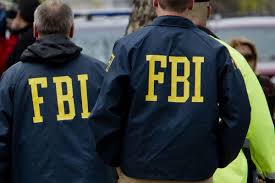
OSLO: The FBI helped Moldovan authorities three times in the last five years to thwart potential smuggling of nuclear and radioactive material, a Moldovan interior minister said Wednesday.
The cases in the former Soviet republic involved sting operations, and no one from jihadi groups was involved, a U.S. law enforcement official familiar with the investigations said.


But officials were concerned that smugglers would try to sell to extremist groups such as ISIS, the U.S. source said, and the cases offer a glimpse at efforts to keep such materials — which in some cases could be used for weapons — from being sold on the black market.
U.S. Rep. Adam Schiff, a California Democrat and ranking member on the House Intelligence Committee, said officials have been long concerned about radioactive and nuclear material being smuggled out of the former Soviet Union.
“We know that these radical Islamic groups like al Qaeda and ISIS would love to get their hands on radioactive materials to fashion some sort of bomb,” Schiff said.
“We’ve had a number of scenarios since the collapse of the Soviet Union where there have been sales or purported sales,” he added. “This is a concern with us very much today and unfortunately into the future.”
A bomb made of the materials could be devastating, Schiff said. “Should they get this material and go to Times Square or the financial district, they could render these areas uninhabitable for some time,” Schiff said.
The United States and Moldova have been working together for years to counter nuclear smuggling, said Eric Lund, spokesman for the Department of State’s Bureau of International Security and Nonproliferation.
A joint action plan, approved by both countries in July 2011, aims to improve security at facilities with radiological sources, provide radiation detection equipment, and share best practices against nuclear smuggling, Lund said.
U.S. officials are working with Russian authorities about the smuggling, State Department spokesman John Kirby said. “I can’t speak to a specific operation or investigation going on, but it is an issue that we routinely talk to Russian authorities about, and as I said, I think we believe is a shared concern between our two governments,” Kirby said.