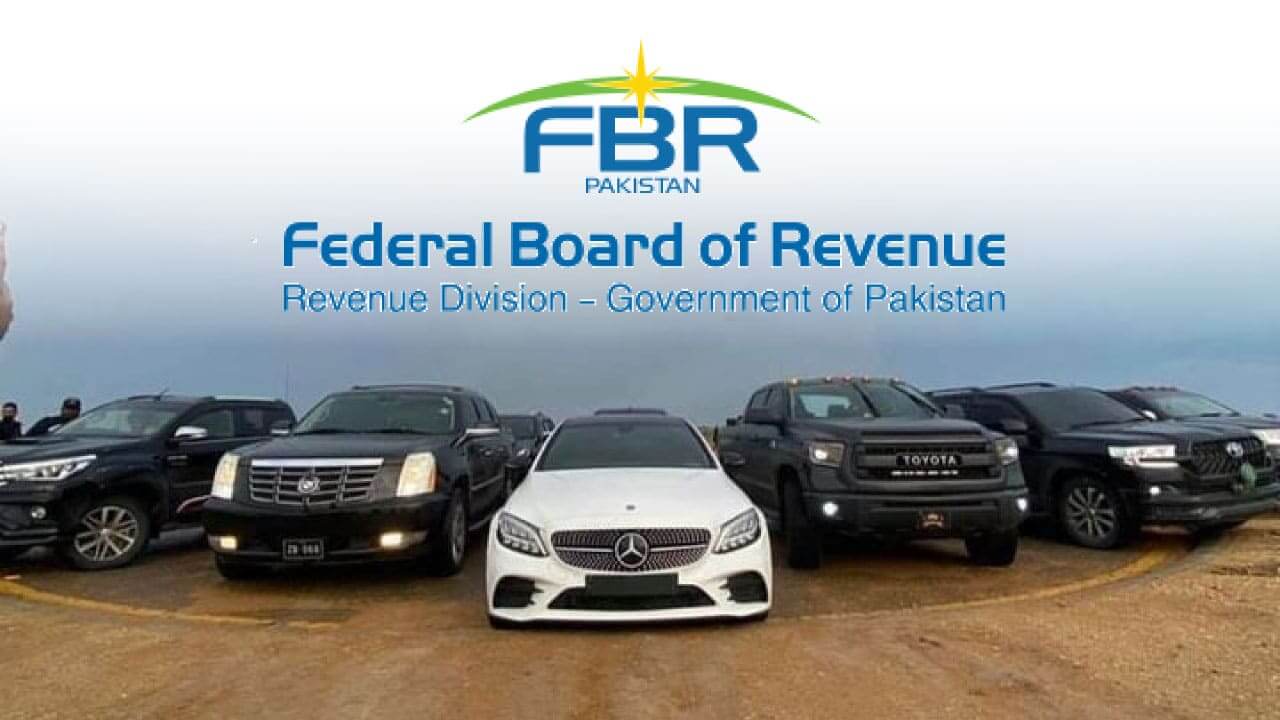
ISLAMABAD: The Federal Board of Revenue (FBR) has officially commenced the distribution of brand-new Honda City vehicles to its tax officers, a move that has ignited a fresh wave of public outrage. Dozens of these cars have already arrived at the FBR’s Karachi headquarters, part of a larger plan to procure a total of 1,010 vehicles valued at approximately Rs. 6 billion, with an advance payment of Rs. 3 billion already made.
The procurement agreement for these vehicles was finalized in January 2025, and the initial payment secured the delivery of the first batch of 500 cars. The FBR claims these vehicles are intended to enhance officer mobility, thereby improving tax enforcement operations across the country.

Public Backlash and FBR’s Clarifications
Despite the FBR’s stated objectives, the expensive procurement has faced significant backlash from both parliamentarians and the general public, who question the rationale behind such a large expenditure amidst ongoing economic challenges faced by the nation.
In response to earlier criticisms, the FBR had issued an explanatory letter to a parliamentary committee. This letter clarified that the vehicles are being allocated strictly to officers of Grade 17 and 18 who are posted in field offices, explicitly excluding officers of Grade 19 and above from the scheme. The FBR also assured that the cars would not be handed over to individuals for personal use but would instead be assigned to their respective offices. Furthermore, all vehicles will prominently display official FBR stickers to prevent any personal misuse. Despite these assurances, the move continues to draw strong public opposition.
FBR Issues Comprehensive SOPs for Vehicle Allocation and Management
To address concerns regarding transparency and accountability, the FBR has now issued a comprehensive set of Standard Operating Procedures (SOPs) to regulate the allocation, utilization, and management of these new operational vehicles across its field formations.
These SOPs apply specifically to the vehicles procured under approvals granted by the Prime Minister on September 19, 2024, endorsed by the Economic Coordination Committee (ECC) on November 6, 2024, and finalized by the Federal Cabinet on December 2, 2024.
Key features of the new SOPs include:
Allocation: Each FBR Unit will receive one vehicle, with additional allocations possible based on written justification of operational needs, certified by the designated Officer-in-Charge within 30 days.
Registration & Costs: The Administration Wing will manage vehicle registration and associated costs like token tax, smart card fees, and M-TAG registration. Disposed vehicles will be replaced, and surplus vehicles will be managed by a central pool committee.
Monitoring & Fuel: A robust monitoring system requires Officers-in-Charge to verify fuel usage, journey records, and logbooks, and compile quarterly utilization reports. Each vehicle is entitled to 200 liters of fuel per month, with increases subject to Committee approval.
Maintenance: Maintenance costs for the initial two years or mileage thresholds (30,000 km for Honda City, 40,000 km for Toyota Yaris) will be borne by the manufacturer.
Strict Usage Rules: Operational vehicles are strictly for official duties. The controlling officer will not receive a conveyance allowance. Usage by subordinates for official work is allowed, but senior officers cannot interfere. Misuse can lead to allocation cancellation and disciplinary action.
Oversight Committee: A Board-level Committee comprising key FBR officials will resolve complaints, approve allocations, and conduct biannual fuel consumption reconciliations.
Transparency & Review: The FBR’s Admin Wing will conduct annual third-party audits to ensure SOP compliance. Aggrieved officers can file representations for review within 30 working days.
Through these five-layered SOPs, the FBR aims to optimize the operational efficiency of its field formations while mitigating misuse of official vehicles. These new guidelines underscore the FBR’s commitment to institutional governance, resource accountability, and operational transparency in its nationwide field operations, even as the public debate around the procurement continues.