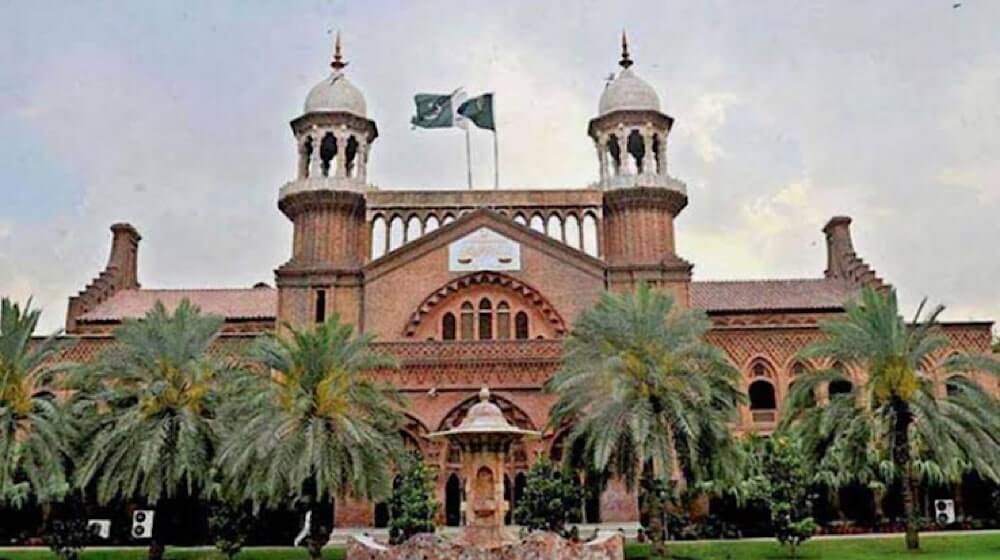
LAHORE: The Federal Board of Revenue (FBR) has failed to submit its written response before the Lahore High Court (LHC) in a constitutional petition challenging the legality of its reward distribution mechanism, commonly known as the peer ranking system.
The LHC has taken serious notice of the matter and issued directives to several top government officials, including the Principal Secretary to the Prime Minister, FBR Chairman, members of the FBR Policy Board, federal ministers, heads of parliamentary finance committees, the Auditor General of Pakistan, and the Director General FIA.


All concerned authorities have been instructed to file their replies on allegations related to the alleged misuse of public funds.
The petition was filed by Advocate Waheed Shahzad Butt through constitutional lawyer Muhammad Azhar Siddique under Article 199 of the Constitution. It questions the transparency, legality, and constitutional validity of both Inland Revenue Reward Rules and Customs Reward Rules.
According to the petitioner, these rules have enabled the unchecked allocation of millions of rupees from the national exchequer in the form of incentives to senior FBR officers. The plea argues that the reward framework operates without proper statutory approval and lacks adequate oversight.
Speaking on the issue, Muhammad Azhar Siddique stated that the scheme reflects systemic misuse of public money. He emphasized that the court’s decision to summon senior officials highlights the gravity of the allegations and underscores the need for full accountability in the use of taxpayer funds.
Despite formal notices from the court, the FBR has yet to present its stance, further intensifying scrutiny over the institution’s handling of the matter.
Legal experts involved in the case allege that the reward mechanism is based on a forced peer-ranking model introduced without mandatory approval from the FBR Policy Board, as required under the FBR Act, 2007.
Under this system, officers were reportedly grouped into categories receiving rewards equivalent to multiple additional salaries over a six-month period.
The petition also challenges the legality of decisions taken by the FBR Board-in-Council, claiming they contradict provisions of the FBR Act and violate the Supreme Court’s ruling in PLD 2016 SC 808. It asserts that any financial incentives granted without lawful authorization or parliamentary oversight are invalid from the outset.
The case is expected to have far-reaching implications for governance standards, financial transparency, and accountability within Pakistan’s revenue institutions. Further proceedings will continue once responses are received from the officials summoned by the court.