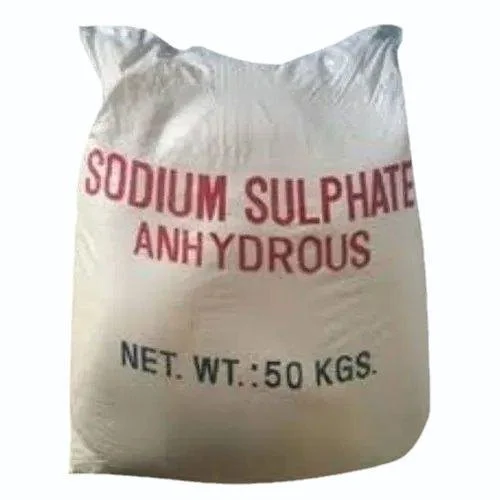
ISLAMABAD: FBR has revised customs values for imported sodium sulphate anhydrous, replacing valuation rules that had been in force for more than a decade.
The Federal Board of Revenue (FBR) has revised the customs valuation of sodium sulphate anhydrous, introducing new values after reviewing international prices, recent import trends and data from the preceding 90 days.


Under Valuation Ruling No. 2107/2026, the Directorate General of Customs Valuation prescribed new customs values for the industrial chemical.
The ruling supersedes Valuation Ruling No. 891/2016 dated July 27, 2016, read with Order-in-Revision No. 266/2016 dated November 21, 2016.
FBR updates decade-old customs valuation
The Directorate initiated the fresh valuation exercise after determining that the existing customs values had become more than 10 years old.
A meeting with relevant stakeholders was held on September 18, 2026, where importers and other stakeholders presented their views and documentary evidence regarding prevailing market prices.
Before the valuation exercise, notices were issued to relevant stakeholders, allowing them to submit invoices, contracts, price lists and other verifiable documents supporting their declared values.
Importers told the Directorate that international prices of sodium sulphate anhydrous were higher than the values prescribed under the earlier ruling. They maintained that their declared transaction values reflected prevailing international market conditions.
Stakeholders also requested that the revised valuation take into account import data from the preceding 90 days and current international price trends.
Directorate reviews import and international price data
The Directorate conducted a detailed analysis of import data for the preceding 90 days to determine prevailing transaction values and identify recent import trends.
International price information presented by stakeholders was also examined alongside available import data and other relevant factors.
The Directorate noted that sodium sulphate anhydrous is primarily an industrial product and is generally imported as a raw material for manufacturing processes.
Accordingly, the valuation exercise considered factors including the product’s nature and end-use, international market prices, country of origin and available import data.
Customs valuation methods examined sequentially
The Directorate examined the valuation methods prescribed under Section 25 of the Customs Act, 1969 and applied them sequentially.
The transaction value method under Section 25(1) was found unsuitable because sufficient information was not available regarding the adjustments required under Section 25(2) to establish an accurate transaction value.
The identical goods method under Section 25(5) was also examined. However, available references could not be relied upon exclusively because adequate demonstrable evidence regarding quality, specifications and commercial or industrial quantities was unavailable.
The similar goods method under Section 25(6) was considered as well, but the available references were deemed insufficient for sole reliance.
A market enquiry under Section 25(7) found that the product, being industrial in nature, was not readily available in the domestic market.
The computed value method under Section 25(8) was also examined but could not be applied because verifiable information concerning conversion costs and associated manufacturing expenses in the exporting country was unavailable.
The Directorate therefore determined the revised customs values under Section 25(9) read with Section 25(6) of the Customs Act, 1969.
The Directorate clarified that if the actual transactional or invoice value retrieved from the relevant consignment is higher than the customs value prescribed under the ruling, assessment will be made on the higher value in accordance with Section 25(1) of the Customs Act, 1969.
Such cases may also be referred to the Directorate General of Customs Valuation.
For consignments imported by air, the difference between air freight and sea freight will be added when determining the assessable value.
The ruling applies to the descriptions and specifications listed in the valuation table, while the HS codes have been provided for illustrative purposes.
Importers given 30 days to file revision petitions
The revised ruling will remain effective until it is rescinded or revised under Section 25A(4) of the Customs Act, 1969.
Importers and other affected parties may file a revision petition under Section 25D within 30 days before the Director General, Directorate General of Customs Valuation, Karachi.
Customs Collectorates have been directed to ensure strict implementation of the revised valuation ruling and immediately report any anomalies to the Directorate General.
The revised framework is intended to provide updated valuation benchmarks for sodium sulphate anhydrous imports after more than a decade under the previous valuation regime.