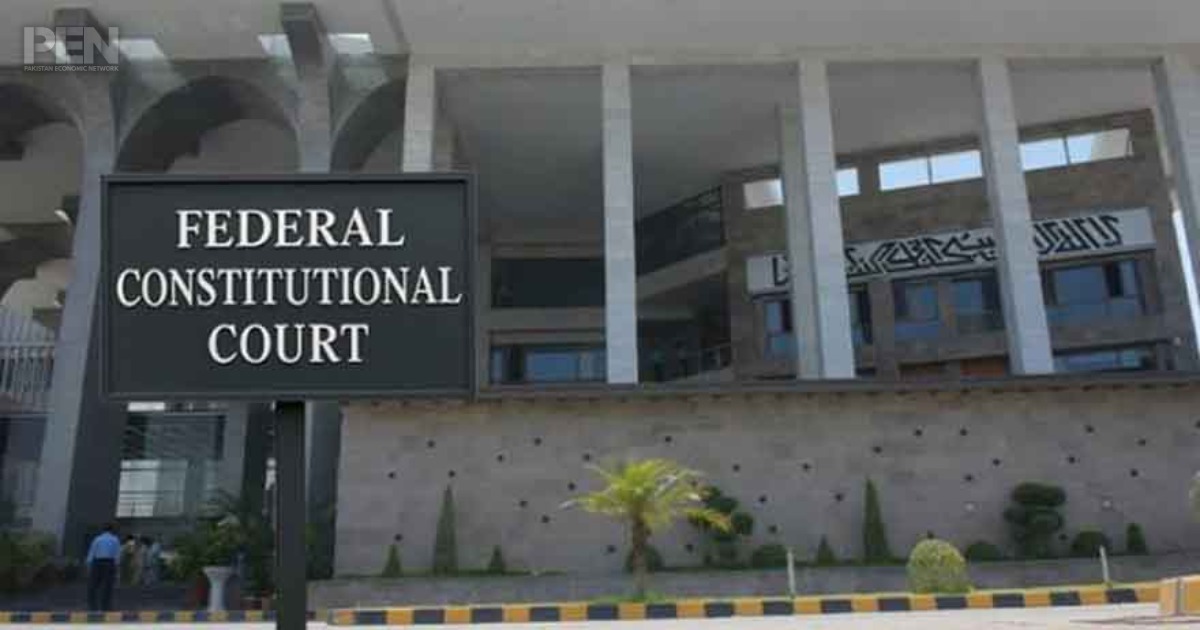
ISLAMABAD: In a landmark judgment with major implications for taxpayers and the real estate sector, the Federal Constitutional Court (FCC) has unanimously struck down Section 7E of the Income Tax Ordinance, 2001, declaring the controversial property tax unconstitutional and void from the very beginning.
Chief Justice Amin-ud-Din Khan, along with Justice Ali Baqar Najafi, announced the short order in Islamabad, ending years of legal uncertainty surrounding the deemed income tax imposed on immovable properties through the Finance Act 2022.


Section 7E had introduced a deemed rental income tax on immovable properties, allowing tax authorities to impose income tax on property owners even if the property generated no actual rental income. The provision faced strong opposition from taxpayers, legal experts and business groups across Pakistan.
The levy triggered constitutional challenges in multiple High Courts, with petitioners arguing that the government could not impose income tax on unrealized or hypothetical income. The tax was widely criticized for impacting salaried individuals, retirees, inherited property owners and businesses holding unused real estate assets.
Different High Courts had delivered conflicting judgments on the matter. The Peshawar High Court and Balochistan High Court declared Section 7E unconstitutional, while the Sindh High Court upheld the law. The Islamabad High Court partially struck down the provision, whereas the Lahore High Court ultimately validated it after intra-court appeals.
Due to the conflicting rulings, the Federal Constitutional Court consolidated petitions and transfer cases from across the country for a final verdict.
The court heard extensive arguments over seven days in April 2026 from leading lawyers representing taxpayers, corporations, bar associations, the Federal Board of Revenue (FBR) and the federal government.
Key constitutional questions before the court included whether Parliament could legally tax income that had not actually been earned, whether the provision violated constitutional property rights, and whether the levy effectively amounted to a disguised wealth tax beyond Parliament’s constitutional authority.
In its ruling, the FCC declared Section 7E ultra vires the Constitution and void ab initio, meaning the provision is treated as if it never legally existed since its introduction in 2022.
The decision provides major relief to taxpayers and companies that had received tax assessments or demands under Section 7E, including listed corporations, property owners and salaried individuals across Pakistan.
The detailed judgment of the court is expected to provide further legal clarity regarding future taxation of immovable properties and deemed income provisions under Pakistan’s tax laws.