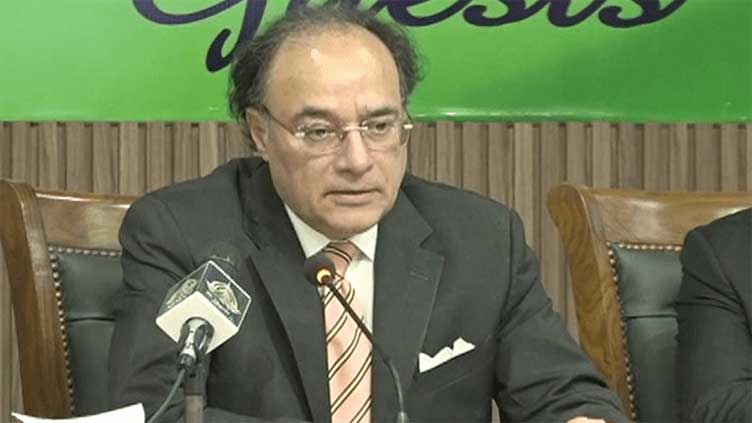
KARACHI: Federal Finance Minister Muhammad Aurangzeb on Wednesday expressed optimism, stating that if the current reform agenda is implemented effectively, it may be the final time the country seeks assistance from the International Monetary Fund (IMF).
Speaking at a budget seminar in Karachi, the finance minister said that while signs of economic stability were beginning to emerge, long-term and sustainable growth hinges on structural reforms.


“The hope is that if we stay committed to reforms, this could be the IMF’s last programme for Pakistan,” Mr Aurangzeb told participants, underlining the government’s renewed focus on economic stabilization and fiscal discipline.
He said that the government aims to withdraw from commercial activities and transfer economic leadership to the private sector, acknowledging that persistent import growth remains a critical challenge for the economy.
Restoring trust through tax reforms
The finance minister reiterated the urgent need for comprehensive tax reforms to improve public trust and broaden the tax base. He said that while Pakistan’s population has crossed 240 million, the country’s tax-to-GDP ratio remains among the lowest in the region.
“The business community is willing to pay taxes, but they are dissatisfied with the current system,” he noted, citing grievances over direct dealings with the Federal Board of Revenue (FBR) as a major concern. “We want to minimize human involvement by leveraging digital tools and data, which will help curb harassment and eliminate the culture of negotiated taxes,” he added.
He further emphasized that tax policy must serve to not only generate revenue but also foster confidence among taxpayers.
Phasing out exemptions, simplifying processes
Mr Aurangzeb declared that the era of selective tax exemptions was over, saying that all profitable sectors, including export-oriented industries, would be brought under the tax net. He said the salaried class, which already contributes significantly through source deductions, would be supported with a simplified and automated return system.
“Auto-fill options will be provided to reduce the need for tax consultants for salaried individuals,” he said.
Energy reforms and business consultations
Touching on the energy sector, the minister said that the government was moving in the right direction, and various reforms were already underway. He mentioned that consultations with business leaders and trade bodies were initiated earlier this year to gather suggestions for the upcoming federal budget.
“We are receiving valuable feedback from several trade organizations and independent experts to align our reforms with global best practices,” he said.
In a major structural shift, the finance minister confirmed that the cabinet had approved the separation of tax policymaking from the FBR. A new Tax Policy Office will now function under the Ministry of Finance, while the FBR’s role will be limited to tax collection.
“This separation will help institutionalize policy decisions and allow for consistency, while also ensuring that the FBR can focus solely on implementation,” he explained.
He also noted the disconnect between the long-term planning needs of the business community and the short-term fiscal planning by the government. “Businesses plan in 5 to 15-year cycles, whereas our government budgeting is annual. The upcoming budget will mark the end of FBR’s role in policy formation,” Mr Aurangzeb stated.