You might also like


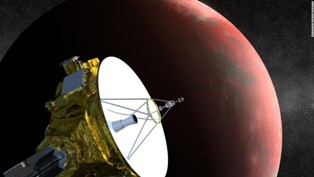
LONDON: The first spacecraft to make a flyby of Pluto and its moons is now beyond Pluto.
And scientists are hoping New Horizons will get the funding and approval to head to a new destination — one of those small, mysterious icy worlds in the Kuiper Belt, which could provide new information about the beginnings of our solar system.
“That encounter is potentially more valuable than the Pluto encounter,” says Brett Gladman, a University of British Columbia astronomer whose research focuses on the Kuiper Belt.
Discovered in the 1990s, it is a region full of thousands of icy objects, including Pluto, beyond the eight major planets of our solar system.
Scientists think the objects in the Kuiper Belt are the remnants of the collapsing cloud that created our solar system. And many look exactly the way they did when the system first formed 4.5 billion years ago, so they would provide a glimpse into the distant past.
New Horizons’ next potential destination “is an object that formed right there where it is today and basically has had all of nothing happen to it over the age of the solar system,” said Gladman, who holds a Canada research chair in planetary astronomy.