
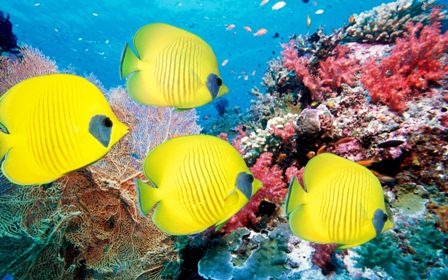


LONDON: Most people are aware that humans have a large impact on coral reefs. But what exactly is the extent of this impact? Scientists have taken a closer look and have discovered that we may have a larger influence than we thought.
In this latest study, the researchers studied nearly 40 islands and atolls across the central and western pacific, including 25 unpopulated islands. This allowed them to see the relative influence of environmental variation and human presence on reef fish.
The scientists accounted for environmental variation among reefs. The researchers also took data on oceanographic and human population at each reef location that they included and then combine this data in models to investigate the influence of both environmental and human variables on reef fish abundance.
In the end, they discovered that human presence is associated with large reductions in reef fish biomass compared to projections for uninhabited islands and atolls. In fact, the scientists discovered that there was reductions of 20 to 78 percent at reefs in the Main Hawaiian islands, up to 69 percent depletion in the Mariana Archipelago and up to 56 percent depletion in American Samoa.

Karachi Port sets 138-year cargo handling record
KARACHI: Pakistan's maritime sector has achieved a major milestone as Karachi Port set a new record in its 138-year history...


