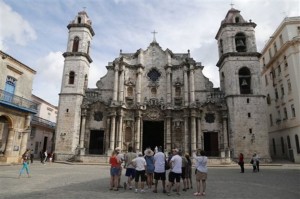
HAVANA: “Is travel to Cuba for tourist activities permitted? No.” That’s what the U.S. Treasury Department website says. And yet Havana is loaded with Americans, from the Floridita bar, where they pose for photos with a bust of Ernest Hemingway, to the Rum Museum, where they swig rum samples after trudging through dim displays of old casks.
Sure, some Americans follow the rules on sanctioned travel — bringing supplies to Cuban churches or synagogues, for example, on a religious activities license. Others come on approved group tours known as “people-to-people” trips with themed itineraries like the arts.


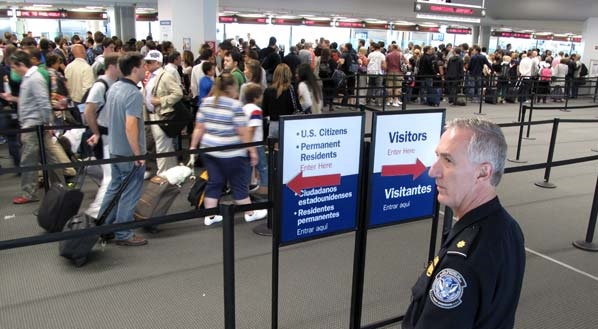
But the 36 percent increase in American visitors here since U.S. President Barack Obama and Cuban President Raul Castro announced a thaw in relations includes many travelers who sidestep the rules. Some travel via third countries by flying to Cuba from Mexico or the Bahamas. Others fly on their own from the U.S., casually filling out paperwork for one of 12 categories of travel authorized by the U.S., without much worry that anyone will check on its accuracy.
The fact is, “there’s been almost no active enforcement” of the tourism ban under the Obama administration, according to attorney Robert Muse, an expert on the legal aspects of Cuba travel.
Here are five vignettes of Americans visiting Cuba on different types of trips.
‘IT’S SO EASY’
New Yorker Zach Chaltiel, 28, traveled to Havana from the U.S. with some buddies after graduating from law school. He researched the trip online, booked a villa through Airbnb, hired a driver, and filled out a form saying the purpose of his trip was “support for the Cuban people,” one of the 12 authorized travel categories.
“It’s so easy,” said Chaltiel as he shared drinks with friends at the Hotel Nacional, overlooking the sea as a peacock strutted by. “I just wanted to go before it becomes all Americanized.”
CURIOUS ABOUT AN ISOLATED COUNTRY
Two Americans peered inside Hemingway’s house, Finca Vigia, marveling at the animal trophies, bookshelves and open liquor bottles that made it seem as if the writer was still there. Nearby, Cuban students lined up for a peek and tourists from around the world took photos.
But the Americans didn’t want to reveal too much about themselves other than first names, Sabine and Anna. They’d come via the Bahamas because getting permission to travel from the U.S. seemed complicated, given their varied interests and lack of official itinerary. Mostly, said Sabine, “we’re interested in coming to a country that has been so isolated.”
DIAPERS, ASPIRIN AND RELIGION
They traveled from Manhattan to a synagogue in Havana, bringing diapers, aspirin and questions. Nicole Gordon, Roger Bernstein and daughters Danielle and Lara obtained permission to travel to Cuba for religious activities with a letter signed by the New York Board of Rabbis. A Cuban government tour guide accompanied them to El Patronato synagogue in Old Havana and other sites like Jewish cemeteries.
“We want to tell the people in America what we see here, the conditions,” Gordon said as the guide translated for members of El Patronato. The visitors saw tattered Spanish-Hebrew prayer books, broken stained glass windows and old photos. And they learned facts like this: There is no rabbi in Cuba, so couples marry under civil law, then wait for visiting rabbis to perform group weddings.
After their donations were delivered, Bernstein tucked some cash in a charity box. “We’re hoping to be a little bit helpful,” Gordon said.
SAILING FROM KEY WEST TO HAVANA
On May 16, five 16-foot Hobie Cat sailboats and over a dozen support vessels ran the first official boat race from Key West to Havana in more than 50 years. The race was originally scheduled for April 18 but was postponed because getting U.S. government permission took longer than expected. Two Hobies were wrecked in rough seas on the way over — though all crewmembers were accounted for — but organizer George Bellenger said the trip’s value outweighed the losses.
“We kicked the doors open with our Hobie Cats,” he said over lunch at the Hemingway Marina in Havana, where the group stayed in a hotel awaiting a boat parade in Havana harbor and a friendly race with Cuban Olympic sailors. Describing centuries of connections between Key West and Havana, he added: “Our working mantra is ‘Bridging cultural divides through traditional maritime heritage.'”
CHALLENGING STUDENTS TO THINK
A group of Washington State University journalism students spent 11 days in Cuba, meeting Cuban journalists at state-run newspapers and Radio Havana, along with ordinary Cubans, from a taxi driver to a hairdresser. The trip was authorized under U.S. rules as educational, and professors kept careful records of their itineraries, as required by regulations — even though they’ve never, from past trips, been asked for proof of their activities.
Especially eye-opening was a visit they made to the “The Park of Sorrow,” where Cubans seek permission from U.S. officials in Havana to travel to America. Most are denied, hence the sorrow.
“Socialism, democracy — it’s not so black and white,” said student Jessica Shapiro. “I’m feeling very conflicted and enlightened.”
“Our students should be challenged to develop their thinking,” said Benjamin Shors, one of the professors. “What better place to foster intellectual development than here?”