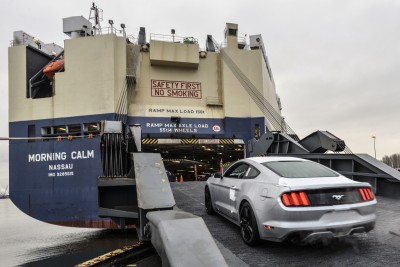
NEW YORK: For the first time in 50-year history, the Mustang will be sold in international markets. Ford is exporting its small size car to the markets around the world.
Taking the 2015 model worldwide only furthers Ford’s status as a top U.S. exporter of vehicles. It has been tracking ahead of General Motors and Fiat Chrysler Automobiles in recent years.
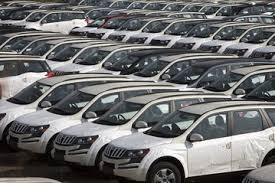
After years as a North American car, the new Mustang was designed and engineered for customers in more than 100 markets, with the first shipments headed to Asia. European customers can get prices and place orders. The first deliveries will arrive midyear.
Ford will export both the hardtop and convertible and had to ensure it can withstand blazing desert heat, rough China roads and the speeds of Europe’s autobahn.
To help with the global distribution, 100 jobs have been added at the Port of Portland, a primary jumping-off point for shipments of Ford and Lincoln vehicles to China and Korea.
Portland is one of eight ports in five states — Oregon, Florida, Maryland, New Jersey and California where logistics arm Ford Trading Co. has vehicle centers. Shipments to Europe will use the Maryland port.
About 3,000 employees on two shifts at the Flat Rock plant make Mustangs for all markets, as well as the Ford Fusion midsize sedan. The Mustang’s new global mandate means making versions with right-hand drive for about 25 new markets including Britain, Australia and South Africa.
Each car undergoes a series of steps to make sure it complies with the vehicle standards in the destination countries. Some of the final work is done at a Ford center at each port, such as attaching stickers or making sure there is an owner’s manual in the proper language. Some vehicles are sprayed with an additional underbody coating to protect them while at sea.
Vehicles must also have the proper customs documentation sometimes in the language of the country it is being shipped to and tracking information so Ford can follow the car’s progress and delivery.
“Preparing these vehicles for shipment to their final destination is critical to satisfying both customer and regulatory requirements for our markets around the world,” said Gerald Schoenle, director, Ford Trading Co. “We want our customers globally to know that their Ford vehicles will meet emissions, safety and road-worthiness requirements.”