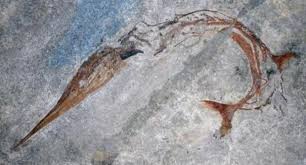


AFRICA: Scientists have recently found 300 -million-year–old fossilized fish which look like a little shark, they have been able to identify and categorize the components of its eyeballs.
That makes this discovery the first finding of fossilized photoreceptors from a vertebrate–the oldest animal ever recorded to possess this trait. Researchers believe, in fact that this fossil was able to see, in color, at least 300 million years ago.
“This fossil fish eye is the first evidence to suggest animals saw in color as early as 300 million years ago,” reports study co-author Professor Andrew Parker of the Natural History Museum of London. He continues, “It is the first case of color vision in an ancient, extinct animal, proving color vision existed a long time before the Jurassic period.”
Scientists scanned the rods and cones–the cells which line the retina of the eye–to determine this. Rods are long and thin and are sensitive to light; cones are shorter and identify colors. Both of these cell types rely on pigments to absorb light; scientists found such a pigment–melanin–in the fossilized eye.
The researchers call the fish Acanthodes bridgei, and they note that bacterial activity might have left a thin film of phosphate over the eyes that helped to preserve this fossil so well.
Professor Parker describes how well-preserved the retina of Acanthodes bridgei is, and how this preservation has enabled paleontologists to identify the first/earliest record of cone cells and rods in an animal. He says “these are both in the retina of a modern human and animal eye to enable core vision.”
Parker goes on to say, “We can now use these techniques to examine color pigments in other ancient animals, bringing us closer to the time when color vision first evolved.”
The paper was published in the journal Nature Communications.

Karachi Port sets 138-year cargo handling record
KARACHI: Pakistan's maritime sector has achieved a major milestone as Karachi Port set a new record in its 138-year history...