

Customs Today
  • Home
  • Islamabad
  • Karachi
  • Lahore
  • National
  • Transfers and Postings
  • Chambers & Associations
  • Business
No Result
View All Result
Customs Today
  • Home
  • Islamabad
  • Karachi
  • Lahore
  • National
  • Transfers and Postings
  • Chambers & Associations
  • Business
No Result
View All Result
Customs Today
No Result
View All Result
Home Science & Technology Science

Fossils of galaxies revealed its formation, evolution

byCustoms Today Report
30/09/2015
in Science, Science & Technology
Share on FacebookShare on Twitter

You might also like

Tesla driverless system to use updated radar technology

12/09/2016

Apple to develop its own self-driving technology

10/09/2016

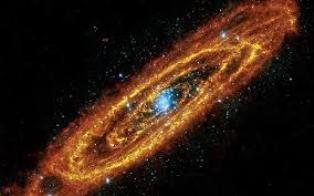
LONDON: An international team has observed massive “dead” galaxies in the universe four billion years after the Big Bang which can reveal the formation and evolution of huge galaxies today.
Furthermore, they identified progenitors of these dead galaxies when they were forming stars at an earlier cosmic epoch.
This study establishes a consistent picture of the history of massive galaxies over 11 billion years of cosmic time.
“We would like to explore galaxy evolution in more detail by carrying out an object-by-object study and by extending the method to an even earlier epoch,” said Dr. Masato Onodera from Swiss Federal Institute of Technology in Zurich, Switzerland.
In the local universe, massive galaxies hosting more than about 100 billion stars are predominantly dead elliptical galaxies, without any signs of star-formation activity.
The team used Subaru Telescope at the summit of Mauna Kea, Hawaii, to observe multiple objects simultaneously, efficiently observing a sample of 24 faint galaxies.
They created a composite spectrum that would have taken 200 hours of Subaru Telescope’s time for a single spectrum of comparable quality.
They discovered that the stellar content of these galaxies is strikingly similar to that of massive elliptical galaxies seen locally.
The analysis shows that the age of the galaxies is already one billion years old when observed four billion years after the Big Bang.
They host 1.7 times more heavy elements relative to the amount of hydrogen.

Related Stories

Tesla driverless system to use updated radar technology

byCT Report
12/09/2016

WASHINGTON: Electric carmaker Tesla announced Sunday it was upgrading its Autopilot software to use more advanced radar technology. In a...

Apple to develop its own self-driving technology

byCT Report
10/09/2016

SAN FRANCISCO: Apple may not become an automaker, but it still wants to develop its own self-driving technology. The iPhone-maker's...

NASA spots slowest known magnetar

byCT Report
10/09/2016

WASHINGTON: Astronomers have found evidence of a magnetar - magnetised neutron star - that spins much slower than the slowest...

‘YouTubers’ outshining old-school television

byCT Report
09/08/2016

SAN FRANCISCO: A media revolution is taking place, and most people over 35 years of age aren’t tuned in. Millennial...

Next Post

Google celebrated presence of liquid water on Mars

  • Terms and Conditions
  • Disclaimer

© 2011 Customs Today -World's first newspaper on customs. Customs Today.

No Result
View All Result
  • Transfers and Postings
  • Latest News
  • Karachi
  • Islamabad
  • Lahore
  • National
  • Chambers & Associations
  • Business
  • About Us

© 2011 Customs Today -World's first newspaper on customs. Customs Today.