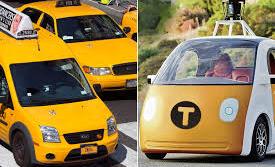


EUROPE: Self-driving cars have been gaining lots of attention, especially with companies such as Google Inc (NASDAQ:GOOGL)(NASDAQ:GOOG) and Tesla Motors Inc (NASDAQ:TSLA) advancing their own autonomous vehicles.
The future of transportation seems to focus on saving greenhouse gas emissions, as well as using clean energy. Would it be possible to combine these two factors and still be economically aware in the auto-making industry?
A study located at the Lawrence Berkeley National Laboratory had the answer. The goal of this study was to analyze the efficiency of driverless taxis in urban areas across the globe. These taxis would have to greatly minimize greenhouse gas emissions and be cost-effective.
The researchers concluded that a driverless taxi in 2030 powered by electricity would reduce green house gas emissions greatly. An autonomous taxi would decrease greenhouse gas emissions by 63 to 82 percent compared to a hybrid vehicle used for personal driving.
The Berkeley Lab also compared a driverless taxi to a 2014 gasoline powered, private vehicle. The self-driving taxi would release 90 percent less greenhouse gas emissions than the gasoline fueled car. The key to emitting less greenhouse gases? The answer is right-sizing.

Karachi Port sets 138-year cargo handling record
KARACHI: Pakistan's maritime sector has achieved a major milestone as Karachi Port set a new record in its 138-year history...