

Customs Today
  • Home
  • Islamabad
  • Karachi
  • Lahore
  • National
  • Transfers and Postings
  • Chambers & Associations
  • Business
No Result
View All Result
Customs Today
  • Home
  • Islamabad
  • Karachi
  • Lahore
  • National
  • Transfers and Postings
  • Chambers & Associations
  • Business
No Result
View All Result
Customs Today
No Result
View All Result
Home Uncategorized

Galaxies die by strangulation, researchers

byCustoms Today Report
16/05/2015
in Uncategorized
Share on FacebookShare on Twitter

You might also like

Pakistan to get $3b loan from Islamic Trade Financing Corporation

20/10/2024

Lahore I&I & Enforcement anti-smuggling operations achieve record success in early FY 2024-25

10/09/2024

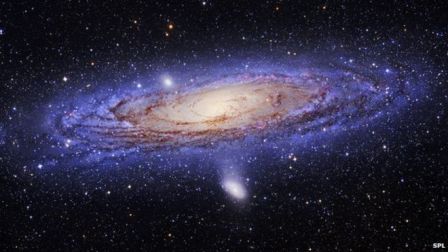
CANADA: Scientists believe that they may have finally found the answer as to what causes galaxies to die. In a new study, researchers have revealed that dead galaxies, or those that no longer produce stars, are likely killed because they have been strangled to death.
Astronomers know that there are two main categories of galaxies. Those that produce new stars such as our very own Milky Way and those that do not. Until now, however, scientists are not certain what causes galaxies to stop forming new stars.
One of the theories as to what switches off star formation in galaxies is the process known as strangulation, through which the cold gas necessary for star formation is gradually choked off. The other theory posits that gas is suddenly removed from a galaxy, possibly pulled by another galaxy’s gravitational pull.
In a new study published in the journal Nature on May 14, University of Cambridge astronomer Yingjie Peng and colleagues compared 3,905 star-forming galaxies with 22,618 galaxies that no longer produce stars and found evidence that the cause of most of the deaths of the galaxies was strangulation.
Peng, however, said that although they have found that strangulation is the cause of most galaxy’ death, there is still a need to understand the mechanism behind strangulation. It is possible that nearby galaxies contribute to the depletion of a galaxy’s gas supply essential for star formation.
Stars are mostly made up of helium and hydrogen. The researchers looked at the concentration of metals that are heavier than helium and hydrogen, which form when stars fuse the two elements into heavier elements. They found that dead galaxies contain higher amounts of metals.
When a galaxy’s supply of gas is choked off, there are still some gas left inside and this can be used in star formation. The stars can then form elements that are heavier than helium and hydrogen.


Tags: Galaxies die by strangulation

Related Stories

Pakistan to get $3b loan from Islamic Trade Financing Corporation

byCT Report
20/10/2024

ISLAMABAD: Islamic Trade Financing Corporation (ITFC) to provide Pakistan with a $3 billion loan, according to an official statement released...

Lahore I&I & Enforcement anti-smuggling operations achieve record success in early FY 2024-25

byCT Report
10/09/2024

LAHORE:  Regional Directorate of Customs Intelligence & Investigation has demonstrated exceptional performance in the first two months of the fiscal...

ICCI and CDA to join hands for tree plantation drive in Capital

byQaisar Mansoor
09/08/2023

ISLAMABAD: Islamabad Chamber of Commerce and Industry (ICCI) in collaboration with the Capital Development Authority (CDA) would jointly launch a...

Customs Officials Yawar Abbas & Tariq Mehmood kidnapped in Karachi

byCT Report
08/07/2023

KARACHI: Customs Intelligence Officer Yawar Abbas and Customs Preventive Officer Tariq Mehmood who were working against smuggling were kidnapped by...

Next Post

Singtel’s profit rises 3.5%, Australia drives mobile growth

  • Terms and Conditions
  • Disclaimer

© 2011 Customs Today -World's first newspaper on customs. Customs Today.

No Result
View All Result
  • Transfers and Postings
  • Latest News
  • Karachi
  • Islamabad
  • Lahore
  • National
  • Chambers & Associations
  • Business
  • About Us

© 2011 Customs Today -World's first newspaper on customs. Customs Today.