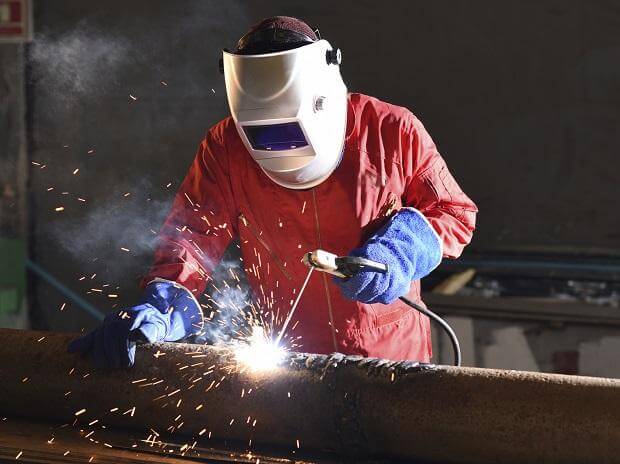
BERLIN: Trains laden with German car parts, machinery and industrial components depart from Duisburg, Hamburg or Leipzig several times a week bound for markets and manufacturing plants in China.
Sending goods via the 11,000km trans-Siberian route is much cheaper than air freight and takes a little over two weeks — about twice as fast as shipping the containers by sea. Trains bearing Chinese textiles, electronics and consumer goods journey back the other way.
As China’s stock market sinks and its economy slows these deep trade links are an increasing source of concern in Germany: Europe’s biggest economy is reliant on exports and has been a particular beneficiary of China’s sustained boom.
But having expanded by 11 per cent last year, German exports to China increased by a modest 1.4 per cent in the first five months of this year.
German machinery exports to China fell 5 per cent in the first half of 2015 and Volkswagen and BMW’s car sales in China have started to wane. German auto, engineering and chemical stocks have tumbled.
Thomas Kargl, chief executive of Far East Land Bridge, a Vienna-based logistics company, says he has not observed a decline in freight volumes on the trans-Siberian route. On the contrary, business increased strongly in the first six months of this year because freight customers have become more cost-conscious, he says.
Nevertheless, Ralph Solveen, an economist at Commerzbank, warns “there can be no doubt that the latest news from China is a concern . . . China’s economic problems have increased the downside risks for the German economy”.
German companies were among the first international groups to move into China and have reaped rich rewards. BMW enjoyed a 45 per cent compound annual sales growth rate in China between 2005 and 2012, which made China its largest sales market. At Volkswagen, Germany’s largest company by revenues, China accounted for almost 40 per cent of its car sales last year.
All the German carmakers have played down the importance of Chinese profitability because of the sensitivities surrounding making so much money out of one market. The impact of losing China is massive
Bilateral trade between Germany and China totalled €154bn in 2014. China is Germany’s fourth-largest export market and some 5,200 German companies are active there.
“Of course a certain amount of caution is necessary but I don’t see a really dramatic impact on the German economy, in particular because exports to the United States remain strong, and European demand is recovering,” said Tim Gemkow, economist at the Association of German Chambers of Commerce and Industry (DIHK). “Germany is strongly export orientated but those exports are quite well balanced.”
German companies have been warning about a normalisation of the China market for some time. They have tried to avoid growing too dependent on sales there by expanding in other emerging markets (although many of those are now looking vulnerable, too). Overall, China accounts for 6.5 per cent of total German exports and so some analysts argue the slowdown is manageable.
China has been roiling global markets all summer as its authoritarian leaders try to stop a huge stock bubble from bursting and its slowing economy from stalling
Andreas Rüter, Germany chief at AlixPartners, the consultancy, said many German machinery companies had only just started to tap the potential of the Chinese market and therefore they still expected strong growth there in coming years.
“Companies should use this period of slower growth to consolidate and do their homework in China: it’s not just about cost-savings, but also checking up on their suppliers, reporting and governance structures,” he said.