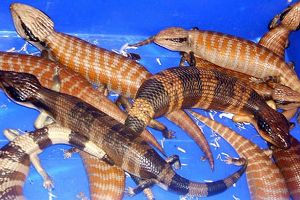
BERLIN: Lizards, snakes, frogs and tadpoles were among the 400-plus animals that a German man attempted to smuggle out of Costa Rica on Sept. 9, 2014.
Late last year, security at Juan Santamaría International Airport outside of San José uncovered more than 400 live animals in the luggage of a German tourist named Maciej Oskroba. The find, the largest of its kind in 20 years, would have been worth thousands of euros on the European pet market. Oskroba’s ham-fisted attempt to sneak the animals out was easily foiled, but the wildlife trade is more often a bureaucratic challenge with officials scrutinizing paperwork instead of opening suitcases full of reptiles.

On Friday, customs and border inspectors in Costa Rica are wrapping up a two-day training session on enforcing the Convention on International Trade in Endangered Species of Wild Fauna and Flora, or CITES, an international wildlife trade regulatory agreement, with technical assistance from the U.S. Fish and Wildlife Service and the Department of the Interior. More than 20 customs inspectors and 10 officials from the National System of Conservation Areas attended the training event in the Costa Rican capital supported by the U.S. Embassy in San José. The training this week in Costa Rica was one of several across Central America and Panama.
Officials from Costa Rican customs and the National System of Conservation Areas attend a workshop on wildlife trafficking on Sept. 17, 2015. (Courtesy of MINAE)
The United States is one of the world’s largest importers of wild fauna and flora. Central America’s proximity to the U.S. makes it even more important for the region and U.S. customs officials to be on the same page when it comes to flora and fauna trade.
“As a consuming country, it’s incumbent on us to make sure that trade is happening legally and sustainably,” said Christina Kish, project manager with the International Technical Assistance Program of the U.S. Department of the Interior.
Kish said part of her job is to emphasize the impact of illegal wildlife trade from both environmental and security perspectives, noting that goods like ivory, for example, can be major sources of revenue for organized crime or terrorists.
“In countries where security, drugs and weapons are a high priority things like environment and wildlife get down at the bottom of the list,” Kish said. “We try to stress why it’s important.”
Sarita Valentin, an inspector with the U.S. Fish and Wildlife Service in Miami, said that she sees a large number of butterflies and reptile leather illegally imported from Central America. Seasonally, she said, officials also often see a spike in mammals being smuggled into the country by collectors or the pet market, but also for religious ceremonies in some cases.
Part of the responsibility beyond assisting in CITES training is also informing the roughly one million U.S. tourists who visit Costa Rica annually about how their purchases abroad can affect wildlife and flora stocks.