BERLIN: The German government on Wednesday stuck to its economic growth forecast of 1.7 percent for this year, despite a slowdown in emerging markets, as strong domestic demand is replacing exports as the main pillar of Europe’s largest economy.
Robust private consumption, helped by record-high employment and rising real wages, as well as higher state spending on refugees have become the biggest growth drivers in Germany, leading to an economic expansion of 1.7 percent in 2015.
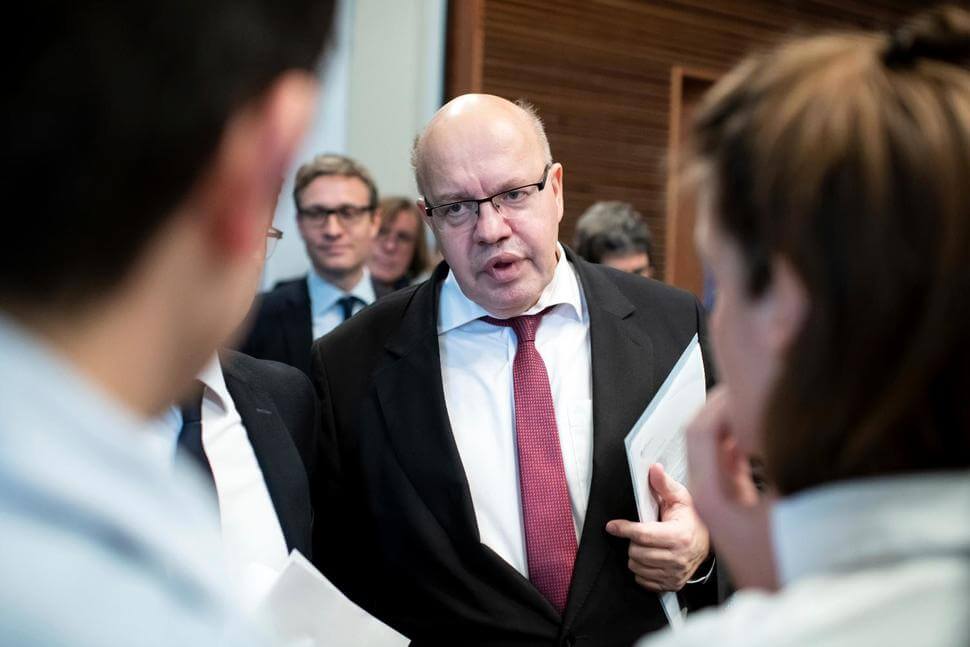
“Germany’s economic upswing will continue this year and next,” Economy Minister Sigmar Gabriel told a news conference to present updated German growth forecasts. “Our growth model has become more domestically driven.”
Gabriel pointed to the introduction of a national minimum wage last year and the highest increase in pension entitlements in more than two decades this year.
“With this, we have reduced dependencies from external economic risks and created the basis for stable growth also under more difficult global conditions.”
German imports are expected to rise at a faster rate than exports this year and next, the minister said, adding other euro zone countries were benefiting from Germany’s strong domestic demand which was drawing more foreign goods.
Turning to monetary policy, Gabriel defended the European Central Bank, saying it was time to stop bashing ECB president Mario Draghi and reach agreements on measures to boost growth.
The government predicts economic growth to slow to 1.5 percent in 2017, partly because of extraneous effects such as more public holidays falling on normal week days, Gabriel said.
But he also cited weaker demand from major export destinations such as China and countries in Latin America.
The government expects employment to reach a record of 43.5 millions this year and nearly 44 millions in 2017. That should further propel domestic demand and push up tax revenue, enabling the government to increase state spending.
“Thanks to its strong economic position, I’m confident that Germany will master the challenges of accommodating and integrating the refugees,” Gabriel said.
Looking ahead, Gabriel urged more investment in education. “Schools in difficult neighborhoods, where a lot of young people are dropping out, have to become the lighthouses, the cathedrals in our country,” said Gabriel, who is also leader of Chancellor Angela Merkel’s junior partner, the Social Democrats.
The German government has run a balanced budget since 2014 and the state, including social funds, is heading for an overall surplus of some 11 billion euros ($12.4 billion) this year.
The coalition has agreed to stick to its goal of a balanced budget until 2020. Finance Minister Wolfgang Schaeuble has said Germany must lead by example when it comes to budget discipline.
Germany’s budget rules, the co-called Schuldenbremse, would theoretically allow Berlin to take in net new debt of around 0.35 percent of GDP, which would equal up to ten billion euros.