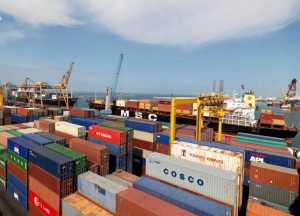
HAMBURG: The Port of Hamburg’s trade volume has more than doubled since 1990 and is projected to double again by 2030.
Walking alongside the River Elbe, it’s easy to get the sense of Hamburg’s long history as a port. Brick warehouses in the German city date to the mid-19th century, though most of those have been converted to offices or museums.

Business leaders including Corinna Nienstedt of the Hamburg Chamber of Commerce strongly back the proposed EU-U.S. trade deal. Business leaders including Corinna Nienstedt of the Hamburg Chamber of Commerce strongly back the proposed EU-U.S. trade deal.
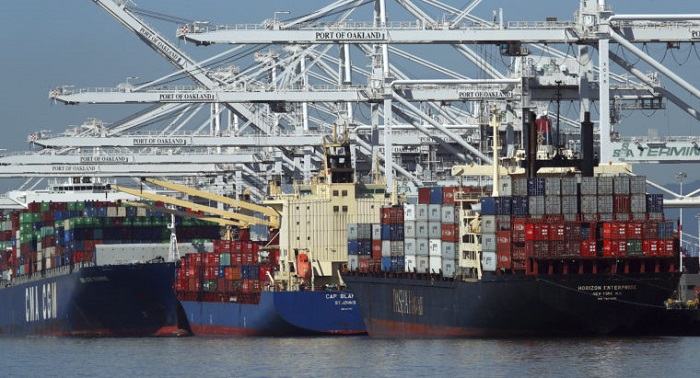
But walk farther along the river toward the North Sea — and you can see the 21st century global economy in action. Tall cranes hoist cargo on and off massive ships. A lot of the shipments involve finished goods. But much of what moves through this port is big and bulky.
“Here we handle about 10 million tons of iron ore and coal for coal refineries or iron or steel production somewhere in the hinterland,” says Axel Mattern, CEO of the Port of Hamburg Marketing Association. The hinterland, in Hamburg’s case, means not just inland Germany but all of Central Europe. The coal moving through Hamburg powers the factories that produce the goods that then come back here to be shipped out.
“Imports and exports are relatively balanced,” says Stefan Matz, who heads the international section at the Hamburg Business Development Corp. “We import machinery, we import electronics, we import chemicals, and many other products, and we also export most of [those] products as well.”
The United States is one of the biggest partners in this two-way trade. The Port of Hamburg’s trade volume has more than doubled since 1990 and is projected to double again by 2030. A poultry processing plant in France. Europe banned treating chicken carcasses with chlorine in the 1990s out of fear that it could cause cancer.
One way to increase this flow of goods would be to complete a trade pact between the U.S. and the European Union. The Obama administration is pushing just such a deal, called the Transatlantic Trade and Investment Partnership, or TTIP.
This year, trade talks with Europeans have been largely overshadowed in the U.S. by controversy over a separate deal with Pacific Rim countries. Negotiations involving that pact are expected to wrap up this year. And then next year, the focus will shift to the European talks.