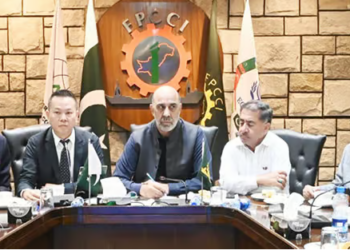
KUALA LUMPUR: There may be a need for the government to recalibrate Budget 2017 next year as the economic scenario may not be that attractive then, says Taxand Malaysia Chairman Dr Veerinderjeet Singh. He said the recalibrated Budget 2016, which was announced in January this year, was largely due to the steep fall in global oil price.
“For 2017, if the oil price remains stable, it may be fine, but if the economic climate still does not improve, tax collection keeps dropping and Goods and Services Tax (GST) revenue declines… I think the government needs to do budget recalibration, either in the first or second quarter of next year. “We hope this does not happen, but it is something that needs to be taken note of,” he told a press conference in conjunction with the Budget 2017 Outlook and Challenges Seminar here today.


Veerinderjeet said the recalibration announcement would not happen soon as the government would have to monitor and collate data from the corporate sector for indicators of a possible budget recalibration in the first or second quarter of the year. Meanwhile, Taxand Malaysia was positive on the establishment of the Collection Intelligence Arrangement, tasked to enhance efficiency in tax collection and compliance.
He said considering that this would be a cooperation between the Royal Malaysian Customs Department (Customs) and the Inland Revenue Board (IRB), this arrangement would ensure the integration of all the information that Customs and IRB had. Veerinderjeet hoped this arrangement would also be extended further to look at the underground economy, for example, businesses under the radar, and bring them up to the surface.
Commenting on a possible merger between the Customs and IRB in relation to tax collection, he said: “When the GST was announced, many of us were consulted by the authority and we proposed that they (Customs and IRB) be merged, but this could not be done.
“GST is under Customs and it is a government department, while the IRB is a corporatised department. “Only when the Customs is corporatised, then it is possible to merge elements of Customs’ GST within the IRB,” he said.
Veerinderjeet said Taxand Malaysia was positive on the merger of the Customs’ GST unit with the IRB because when everything is under one roof, a single audit covering both income tax and GST could be done.