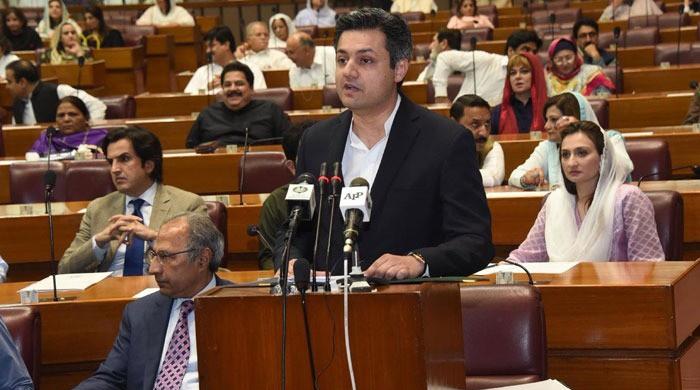
ISLAMABAD: The Pakistan Tehreek-e-Insaf (PTI) led federal government on Tuesday unveiled a Rs7,022 billion austerity budget for the fiscal year 2019-20, setting ambitious tax collection targets to stabilise a faltering economy.
The budget sets an ambitious Rs5,555 billion target for the Federal Board of Revenue—a 25% increase or Rs1.12 trillion in additional taxes from the previous year.
The increased FBR revenue would be supported by a Rs346 billion increase in direct and Rs773bn rise in indirect taxes from the previous budget, which would mean Rs407.7 billion in additional sales tax revenue, Rs363bn increase in income tax collection, Rs265.5bn rise in customs duties, and a rise of Rs99bn in federal excise duties as compared to the previous year.
“A challenging target of Rs5,555bn FBR revenue collection will be combined with aggressive expenditure controls to reduce primary deficit to 0.6% of GDP,” said State Minister for Revenue Hammad Azhar presenting the budget in the National Assembly.
He said the ambitious increase in tax revenue would be combined with “unprecedented reduction in expenditure” by both the civil administration and the military to bridge the widening gap between the government’s revenue and expenses.
The government says the budgetary proposals are focused on economic stability and sustainable growth, with an emphasis on austerity, revenue generation, and uplift of downtrodden segments of society.
The special budget session of the National Assembly was marred by protests from opposition parties, which accused the government of presenting a budget “dictated” by the International Monetary Fund (IMF), from which the government has secured a provisional agreement a $6bn bailout contingent on measures to cut a rising budget deficit.
Budget features
Total budget outlay Rs7,022bn—30% greater than previous year
Rs1,863 billion fixed for Public Sector Development Programme
Budget deficit to be Rs3,560 billion
Tax revenue target set at Rs5,822bn
FBR tax revenue target set at Rs5,555bn
Non-tax revenue target set at Rs894.5bn
Current expenditure set at Rs6,192bn
Development expenditure set at Rs843.4bn
Rs701bn earmarked for Federal PSDP
Rs1,152bn fixed for Defence Affairs and Services expenditures
Civil government expenditure to be Rs431bn
Higher education expenditure of Rs45bn
Government sets aside Rs271bn for subsidies
Inflation targets set at between 5 and 7 per cent
General sales tax on goods to remain at 17 percent
3% value added tax on import of mobile phones eliminated
Rs5,200 FED proposed on every 10,000 cigarettes
Sales tax on sugar proposed to be be increased to 17 percent
Rs40 billion subsidy to be given for electricity, gas
Development expenditure for tribal districts fixed at Rs152 billion
Rs45.5 billion allocated for Karachi’s development programme
Stipend through BISP scheme increased from Rs5,000 to Rs5,500
Govt aims to eliminate circular debt in coming years
The government has formed a new ministry to eliminate poverty, which will introduce programs for social safety. People benefiting from the Ehsaas program include the poor, orphaned, homeless, and disabled sectors of the population.
Ration card scheme being introduced. 80,000 people to benefit from this scheme with interest-free loans.
Taxes:
Minimum taxable income for salaried class to be Rs0.6mn per annum
11 progressive tax slabs ranging from 5 to 35 percent proposed for salaried class
Minimum taxable income for salaried class to be Rs0.4mn p.a.
Eight progressive tax slabs ranging from 5 to 35 percent proposed for non-salaried class
Non-filers no more restricted from purchasing property
Non-filers to be allowed to purchase property of over Rs5mn
Corporate tax to remain at 29 percent for next two years
Wages:
10 per cent increase in salaries for government employees from grade 1 to 16, including armed forces employees
5 per cent ad hoc relief for government employees from grade 17 to 20
No increase in salaries for civilian government employees from grade 21 to 22
Minimum wage set at Rs17,500
Pensions increased by 10 per cent
Ministers agree to voluntary 10 per cent cut in salaries