KARACHI: In a bid to utilise all benefits of Generalised System of Preferences (GSP) Plus, the Pakistan Business Council (PBC) has demanded the government to make industries aware of the opportunities under the European Union’s (EU) GSP Plus scheme.
In its latest report, the PBC also warned the government and exporters that overreliance on the GSP Plus scheme will hurt Pakistan in the long haul because of the significant risks of making the country dependent on a scheme that the European Commission unilaterally controls.


“Pakistan needs to improve regional trade and tap the potential of emerging economies in Asia, Africa and South America, which may not possess as many immediate gains as the GSP Plus scheme, but may be the only way to create stable economic growth,” the report stressed.
The study ‘Pakistan’s EU GSP plus status: first year performance and future potential’ is conducted by PBC, a business policy advocacy forum representing the country’s 47 largest enterprises including multinationals. The report said that though Pakistan has availed the benefits of GSP Plus for over a year, its industry leaders are concerned about the textile sector’s dependency on the scheme and believe that withdrawal of preferential tariffs will significantly hurt the industry.
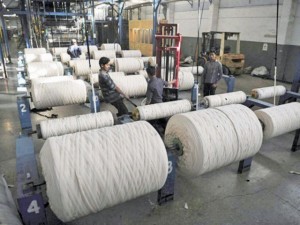
Pakistan is heavily dependent on its textile sector as it makes up over 50% of its total exports. As far as the GSP Plus scheme is concerned, Pakistan’s exports to the EU are much more heavily dependent on textiles.
For instance, Pakistan’s exports to the EU amounted to $5.9 billion in 2014. Out of the total, 72% were just from the textile sector. Compared to the growth of 21% in textile exports to the EU, non-textile exports grew by 17% in 2014. This shows, the report said, that most industries in Pakistan are unaware of the full scope of GSP Plus, assuming that preferences are for the textile sector alone.