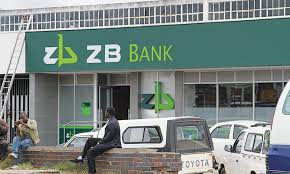
HARARE: The $20 million fresh capital injection by one of ZB Holdings major shareholders early this year has helped to secure the group’s capital position, group chief executive officer Mr Ron Mutandagayi has said.
In an interview on Wednesday, Mr Mutandagayi said that Government injected the $20 million capital in April this year, which helped to enhance liquidity and to bolster its regulatory capital. The short in the arm came as the group is in the process of seeking equity funding and lines of credit to fund growth of its operations.


A meeting of shareholders held in June this year authorised directors to raise up to $150 million, including $10 million required for regional expansion. The funds came in the form of Treasury Bills. “The biggest help of the capital injection is that it secures our regulatory capital. “As you know TBs are acceptable for liquidity computations,” he said, adding that “the money came in the form of TB’s.”
Government is ZB’s second biggest shareholder with a 27 percent, after the National Social Security Authority, which holds 33 percent stake. According to Mr Mutandagayi, the $20 million injection came in the form of Treasury Bills, which ZB Bank could use as security for liquidity funding.
“You can secure funding through deposits you can raise with TBs. You can also go to Aftrades,” Mr Mutandagayi said. He said that the TBs were one of the most attractive collateral instruments accepted for Afreximbank’s traded backed securities funding support, a Government supported initiative to restart interbank. Afritrades is a facility designed to provide guarantees to the interbank borrowing to a maximum of $200 million for banks to bail out each other.
Banks no longer extended support to each other since the demise of interbank at the height of the economic crisis in 2008, fearing inherent risk of defaults in the sector, which could leave them in funding deficit. Yet strong capitalisation, including liquid capital, is critical in every bank’s operations at a time when deposits are low and transitory in nature.
The capital injection from Government was used largely to capitalise ZB’s flagship banking subsidiary in line with Reserve Bank of Zimbabwe’s new higher regulatory minimum capital thresholds.
Prior to the injection by Government the ZB Bank had core capital of about $9 million against the regulatory minimum capital threshold of $25 million for commercial banks as at December 2014. Mr Mutandagayi said that given the limited capacity of local investors to provide significant funding support, the group was looking outside.
“Given the limited capacity of local market support, we have been talking to a number of international investors from all corners of the world. “But equity funding takes a long time (to secure),” he said. The local market has little capacity to fund large capital needs for local companies due to prevailing economic challenges, which have dogged the economy for over two decades now.
There is also concern from Government quarters about the seeming unwillingness local insurance and pensions funds to support productive sectors, which might force Government to legislate. According to the Insurance and Pension Commission, the assets of pension funds grew to $1,8 billion last year from $1,5 billion the previous year.