SYDNEY: Hand of Fate’s action combat system allows each enchanted sword and helmet you pick up to have a tangible benefit in combat, rather than just tweaking your stats. When you wield a flaming hammer you’ll actually light your foes ablaze with every strike, while using a frozen scimitar you can encase them in ice.
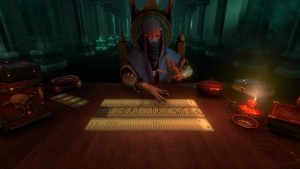
This game is a fun, polished, good-looking roguelike with a clever set-up and even cleverer execution. In a temple at the end of the world, you face off in a game of life and death against a mysterious, hooded figure known only as “The Dealer.”
You might also like


He holds your life in his hands in a very real sense, with events from your past turned into cards for his deck of encounters. The game plays like a mix of FTL and Arkham Asylum, with plot points conveyed through text and combat handled with simple rhythmic beat-em-up mechanics. This combination works remarkably well, creating a good balance between tense resource management and twitchy brawling. Put it on a PS4, though, and for some reason it barely works at all.
The sheer ineptitude on display in Hand of Fate’s PS4 release baffles me. Even in beta the game ran smoothly on PC, and I was playing it on a mismatched rig with an AMD CPU and Nvidia graphics card. Yet despite having only one hardware configuration to work with, Defiant has managed to completely bungle their port to PS4.
In combat slowdown and frame skipping are frequent and occasionally deadly, leaving you to mash dodge and pray nobody ganks you while the screen catches up to the action. While managing your cards you’ll be subjected to constant, headache-inducing screen tears, and when the dealer plays them his voice will frequently stutter. It’s almost as though the developers just hit “export to PS4” in Unity and called it a day without testing.
It’s not like this is a particularly hardware-taxing game, either. It makes use of a painterly, Gothic art style (that, in keeping with the card theme, draws heavily on medieval tarot). Though this style is very appealing to look at, it doesn’t exactly require a high poly count or complex shaders.
The only things in the game that look remotely processor-intensive are the motion blur and depth of field effects, but even then there’s barely anything here that would give a PS3 trouble, let alone a PS4. When it decides to run properly Hand of Fate looks really nice (the lighting is particularly gorgeous), and manages to evoke an atmosphere that is at once unnerving and oddly cozy.
The key to this atmosphere is The Dealer, your enigmatic antagonist and sole companion. As you play the game he comments on the pieces and on your decisions, addressing you with a detached malice. When the game begins his delivery is polite in a sort of perfunctory way, as though he’s bored at the prospect of trouncing another ill-equipped player.
As you begin to best his creatures and prove your worth, however, he starts to become more menacing, clearly worried at the prospect of losing his little game. He’ll even taunt you if you take too long to make a move, or offer an insincere apology when your luck turns sour. It feels like you’re playing against a real person, rather than some soulless computer, which makes it all the more satisfying when you triumph against his challenges.
When you begin a new adventure you’ll be presented with field of face-down cards, one of which hides the entrance to the next area.
All of the other cards contain story events, each with a short text description. Some will throw you onto a battlefield against a horde of randomly-assembled enemies, while others ask you to make tough choices and test your luck in order to overcome more unconventional obstacles.
Occasionally you’ll find a shop where you can buy new items. Regardless of what you encounter, every step you take will consume your supplies, and when they run out you’ll start losing health, so you’ll need to think about buying food before you invest in kickass weapons and armor.
Hand of Fate differs from FTL in that here you have a much greater degree of control over what happens on your journey. Instead of dice rolls the game relies on a card shuffling system similar to Persona 3’s “Arcana Chance” mechanic, and it feels far more fair than pure RNG – even if it works the same in practice.
Whenever you win an encounter for the first time you’ll earn a token that unlocks new cards, and you can use these cards to (quite literally) stack the deck in your favor for your next adventure. You can fill up your equipment deck with legendary artefacts and cover the board in favorable encounters, but enemies get tougher as you progress, and as you embark on new adventures The Dealer will seed your deck with new dangers. You may even put threats in your own way, loading up on unknown encounters in the hopes of earning new tokens.