SYDNEY: Just like the creepy TV ad for the new Honda HR-V, you could be forgiven for thinking you’ve been woken by a bad dream, pursued by a swarm of city-sized SUVs.
Four brand new models have been launched in the past four weeks alone, and that’s only the start of them. The Honda HR-V comes hot on the heels of the Mazda CX-3, Renault Captur and Jeep Renegade unveilings and preview drives.


They are part of the fastest growing segment in the new-car market. Officially, they’re called SUVs, but in reality they are high-riding hatchbacks.
Most are front-wheel-drive and don’t even have a full-size spare tyre. They’re as sensible on a dirt road as high heels. It turns out we’re addicted to the tall driving position that gives us a better view of the road ahead, and now we want that in city cars too.
So what we have is a car with the view of, say, a Range Rover, but which can fit in the same size parking space as a Toyota Corolla.
Genius? No the genius part is that it doesn’t cost much to put a hatchback on stilts but we’re so slavishly in love with the idea of a bit of extra height (presumably to see past some other SUV in front of us in the traffic) we’ll pay up to $5000 more for the privilege.
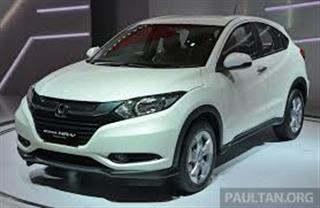
The Honda HR-V (yes, you’ve really got to emphasise the ‘R’ otherwise it could make for an interesting conversation when asked what car you have) is based on the underpinnings of the Honda Jazz hatch and City sedan, which cost below $20,000.
And yet the HR-V’s starting price is $24,990 plus on-roads. Most people we surveyed (well, a room full of motoring writers who haven’t bought a car in decades) nodded silently and seemed to think it was a fair price.
To be fair to the Honda HR-V, it may share its genes with its smaller siblings, but the swoopy body (with hidden rear door handles to look like a coupe) is completely new inside and out and it gets a bigger, 1.8-litre engine with more zip. There are three models in the line-up, and they all come well equipped.
The $24,990 VTi model’s standard fare includes six airbags, a rear-view camera, cruise control, remote entry, an electric park brake, 16-inch alloy wheels, a massive cargo bay and Honda’s trademark “magic” seats, which is the word its gives to back seats that fold, flip and stow every which way to create space for a massive load.
The $27,990 VTi-S gains automatic emergency braking (slamming the brakes at up to 30km/h, using laser and radar to avoid a rear-end crash) brighter, LED headlights (which switch on and off automatically), blind-spot warning, a side mirror that tilts when you grab reverse (so you don’t scratch the 17-inch alloy wheels), rain sensing wipers, fog lights, daytime running lights, and 12V power sockets in the front, middle and rear of the car. The list goes on, but we had to stop otherwise we’d run out of room to explain what the next model gets.
The $32,990 VTi-L gains front and rear parking sensors, tap-shifters on the steering wheel to select a ratio in the CVT auto, electrically folding door mirrors, a giant sunroof that covers almost the entire roof (but which still opens, unlike those in some other cars), leather seats, auto up and down windows for all four doors (the other models offer this convenience for the front doors only), dual zone air-conditioning and uniquely designed 17-inch wheels.
For $1000 more you can option lane departure warning, auto dipping high beam and forward crash warning on the VTi-L. All models come with automatic transmission only; a manual will become available when a diesel version of the HR-V arrives in the next 12 months or so.