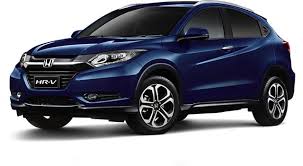
SYDNEY: Honda has gone back to the future with the HR-V but returned with a better gadget. The Honda HR_V VTi has been launched in Australia for $24,990 with 1.8 liter in-line four CVT automatic engine which is capable of covering 100kms distance in 6.6 liters of petrol.
It is not all-wheel-drive, with power strictly through the front wheels on Australian variants. Nor does it have the original’s unique appearance, being relatively conservative in appearance compared with some of its competitors. If the original HR-V had a niche following, the new one is pitched more at the mass market. The basics are quite sound. The new HR-V is based on the Jazz city car, but with the obligatory SUV traits such as a higher ride, more headroom and more luggage capacity.
You might also like


The only engine in the three-tiered line-up at present is a 1.8-litre petrol four (105kW peak power, 172Nm of torque) which is virtually the same as in the Honda Civic hatch. The transmission is a continuously variable CVT automatic. On paper performance is similar to most other city SUVs but the Honda feels more willing than most other non-turbo competitors.
The HR-V also benefits from Honda’s improved interior design, with a neat instrument cluster, simple touch-sensitive climate controls and touch-screen display audio with rear-view parking camera and Bluetooth connectivity across the entire range. In that regard, the entry level VTi is well equipped compared with most of its likely competitors.
The VTi-S adds LED daytime running lights, dual zone climate control, larger alloy wheels and some other trim and convenience additions, while the VTi-L gets the works, including panoramic sunroof, leather upholstery and extra safety kit including a rear view camera which also activates when changing lanes.
On the road it is apparent the new HR-V is a far more accomplished machine than the original regardless of the lack of all-wheel-drive. Despite the slightly higher centre of gravity, it is hardly any more challenging to drive than a Jazz, and even if the off-road ability is negligible, the higher ride height could be an advantage if scaling the odd kerb is ever a necessity.