HONG KONG: A top United Nations anti-drug official has called on China and Hong Kong to sign up to a global initiative to crack down on transnational drug smuggling.
The call comes amid the continuing flood of illegal narcotics – in particular the powerful stimulant crystal meth – from the mainland through Hong Kong to Australia. This was highlighted again last week with the seizure of crystal meth – also known as “ice” – worth A$1.26 billion (HK$7 billion) in Sydney and the arrest of three Hongkongers and a mainland associate.

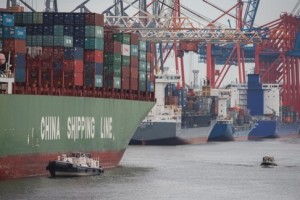
If you look at the container volumes out of Hong Kong and south China, it’s enormous
Jeremy Douglas, the regional representative for the UN Office on Drugs and Crime, has also urged countries in the region to stop “a lot of talk and no action” and cooperate to tackle the problem.
The Global Container Control Programme is led by the UN Office on Drugs and Crime and the World Customs Organisation. If China and Hong Kong joined, that would allow container shipments from the two countries to be risk profiled to other places, greatly improving the security of the container trade, said Douglas.
The programme trains staff in local jurisdictions to expertly identify suspicious cargo consignments by risk profiling manifests including names, addresses, businesses, cargo descriptions and payment methods to find inconsistencies with the information. For example a business named on a cargo manifest may raise suspicions if no information appears on the internet for that firm.
“If you look at the container volumes out of Hong Kong and south China, it’s enormous,” Douglas said. “We encourage both jurisdictions to be involved. They are currently not involved, and they’ve not been receptive to it.”
All information is shared into the UN and WCO intelligence database for the use of member countries and international crime partners.
However, the UN has signed up eight Southeast Asian countries including Thailand, Indonesia, the Philippines, Vietnam and Malaysia. The programme is in operation from the Pakistani port of Karachi, which is Afghanistan’s port-of-call in the large export of heroin, to the Panama Canal.
But we are emphasising that this is trade support: assisting trade, to smartly target high-risk shipments is not about stopping trade
Singapore, like Hong Kong and China another hub for shipping, hasn’t joined the initiative.
While Australia isn’t part of the programme either, it has immediate access to the same UN-WCO database like partners of the scheme.
The UN said the programme, which launched in 2004 and is now effective in 52 countries, has claimed huge success in making major drug seizures from basic procedures such as investigating cargo manifests and invoices to spot red flags.
Those successes include seizures of 23 metric tonnes of cocaine, around 6 metric tonnes of cannabis and 1.2 metric tonnes of heroin worldwide in 2013.
“Some of these governments don’t want any impediment to trade, including an initial inspection especially, so we have to factor that into the logic,” Douglas said.
“But we are emphasising that this is trade support: assisting trade, to smartly target high-risk shipments is not about stopping trade.”
However, Douglas praised China’s efforts to tackle the export of drugs internationally and explained that it was taking a leading role in the region to enhance cooperation.
“We find China really open, and relatively easy to deal with,” Douglas said. “And you would think that they would bury or hide the data, but they are very forthcoming about seizures. And they are making a big effort to engage their neighbours.”
A Hong Kong Customs and Excise spokesman said it would “consider participating” in the UN’s initiative after all, adding it was determined to tackle drug trafficking through international cooperation.
Risk “management” was deployed for container examination, said the spokesman. Its work with mainland and overseas anti-narcotics agencies to mount joint operations “has proven to be effective to combat transnational drug trafficking,” he added.
In the department’s year-end review earlier this month, it revealed 20 per cent more illicit drugs were seized in the city last year as they stepped up international cooperation.
But the amount of methamphetamine – a huge import into Australia – seized last year dropped by 45 per cent to 280kg.
A customs source explained that the drop was related to officials having intelligence on such cases, but choosing not to bust it in Hong Kong so that they could “net a bigger fish” when the drugs arrived in Australia, meaning entire syndicates could be caught.
However, the view of customs appears to have shifted after the government was lambasted for targeting “lowly traffickers” instead of drug kingpins, after six foreign nationals duped into becoming drug mules – who collectively spent seven years behind bars – were freed last November by a Hong Kong judge.
Mr Justice Kevin Zervos urged frontline law enforcers not to be satisfied with prosecuting such mules but to target “major miscreants” behind the narcotics trade because, he said, “they are the evil ones”.
Hong Kong police said dangerous drug offences remained the police commissioner’s top operational priorities. “Police continue to [interrupt] the supply of drugs into Hong Kong by enhancing our intelligence capability and attacking the sources of supply at various levels,” a spokesman said.