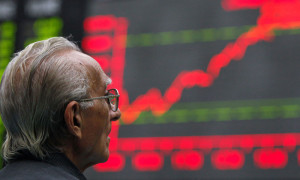
HONG KONG: Hong Kong stocks slipped to four-month lows on Thursday, following the US Federal Reserve’s widely-expected decision to raise interest rates for the first time in a year, with energy, bank and real estate among the worst hit sectors. The Fed’s Open Market Committee (FOMC) moved to raise interest rates by an expected 25 basis points, marking the second rate change in a decade after a near-zero global interest rate environment since the 2008 financial crisis. But investors were surprised by the Fed’s signalling of three additional rate rises in 2017, up from median September estimates of only two.
The Hong Kong Monetary Authority followed suit, raising the base rate by 25 basis points to 1 per cent – the first time in a year it has brought up rates. All sectors were in the red by the end of trading, with the Hang Seng Index at its lowest point since the start of August, down 1.77 per cent or 397.22 points to 22,059.40. The Hang Seng China Enterprises Index slipped 2.34 per cent or 226.99 points to 9,479.16, its lowest level in three weeks. “Hong Kong is going to have a really tough time,” Capital Link Investment Holdings chairman and chief executive Brett McGonegal told the Post, noting that raising interest rates was not the right recipe to cure the city’s hot property market, collapse of capital and the pull back on luxury goods. “It’s not the right thing for Hong Kong at this point.”


Hong Kong markets were likely to stay soft for the next four weeks until US President-elect Donald Trump’s inauguration in January, he said. Selling pressure was likely to accelerate in the near-term, according to Castor Pang Wai-san, head of research at Core Pacific-Yamaichi International (HK). “The markets don’t seem to have bottomed yet,” Pang told the Post. “Liquidity may have the chance to deteriorate further.” Following the FOMC meeting, the US dollar rose to its highest level in almost 14 years, while the yuan depreciated to eight and a half year lows. “Both the US dollar exchange rate and US treasury yield rose obviously, which will be [unfavourable] to Hong Kong’s stock market,” Ben Kwong Man-bun, executive director and head of research at KGI Securities, said in a morning note.