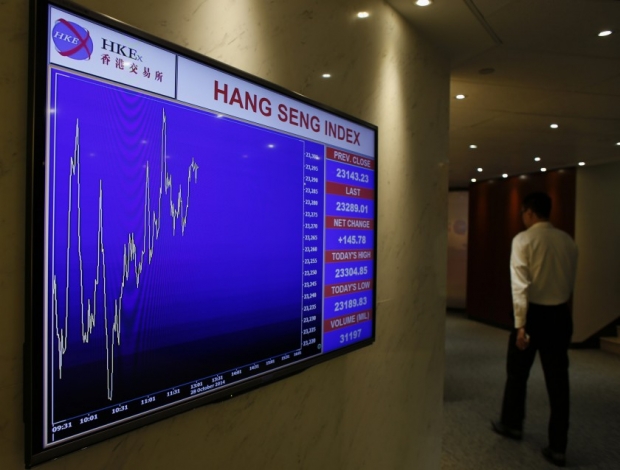
HONG KONG: Hong Kong stocks on Monday suffered their biggest percentage decline in four months, as worries over China’s new rules to curb margin trading and boost short-selling offset the central bank’s latest move to relax monetary policy and spur economic growth.
The Hang Seng Index HSI, -2.02% declined 2% to close at 27,094.93, down the most since early December. The mainland-China-tracking Hang Seng China Enterprises HSCEI, -2.93% slid 2.9% to 14,111.34, marking its steepest fall in three months.
You might also like


Over on the mainland, the Shanghai Composite Index SHCOMP, -1.64% ended sharply lower after a volatile session, down 1.6% at 4,217.08. The index had briefly gained 1.1% in the morning session and touched a new seven-year intraday high of 4,356.00. By the end of afternoon trade, all gains were erased.
The weakness came after China’s top securities regulator unveiled on Friday a raft of measures to curb margin trading, while also allowing fund managers to lend stocks for short-selling and expanding the list of shares which can be sold short. However, the regulator stressed a day later that there was no desire to “suppress” the hot stock market, but rather to improve its stability and healthy development.