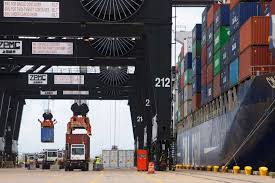
HOUSTON: The Port of Houston is one of the busiest ports in the U.S., and it is expected to get even busier by 2018. However, the growing congestion along the port could that could lead to greater opportunities for the Port of Freeport.
Since 2011, leaders at the Port of Houston have been looking forward to the opportunities that would come with the widening of the Panama Canal, but the growth of the petrochemical industry, and the increase in trade has fostered an unforeseen and rapid growth that has manifest in greater traffic congestion. The Houston Business Journal reported that in 2010, 10,000 trucks per day used the road system near the port. Five years later, the number of trucks more than doubled to about 25,000 to 30,000 each day on the same unimproved thoroughfares.
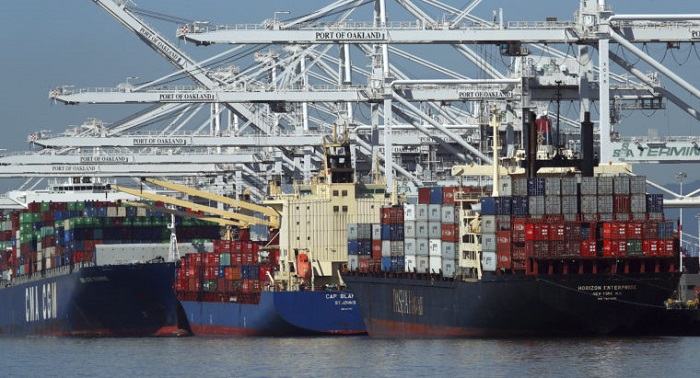

With more projects and greater population growth projected along the port,the traffic counts expected to double again by 2018. “We’re mixing commuter traffic and freight traffic at a level that’s unprecedented, it doesn’t happen anywhere else, not just in Texas, but in the country,” Chad Burke said during Houston Business Journal’s Energy Infrastructure Power Breakfast.. “Unless our region and our state and really even our nation takes notice of that, … we begin to constrict what we can do here.”
Meanwhile, other routes and other ports in Texas could be considered as alternatives in the very near future, and one of those is being led by a group called the Highway 36A Coalition. Fort Bend County Commissioner Andy Meyers, who serves as the chairman of the 36A Coalition, other members of the 36A Coalition, and Port Freeport, testified before the Senate Select Committee on Texas Ports on May 4 and presented the case that the port is best poised of any in Texas to benefit from the Panama Canal Expansion, thereby establishing the viability for the 36A corridor.
“To reiterate, Port Freeport is the only port in Texas that has both the congressional authority to deepen and accommodate the Post Panamax ships and that is in close proximity to the only rail hub on the Gulf Coast of Texas, in Rosenberg,” Meyers said. “We have been receiving a very high level of support for this project from local governments and others in Fort Bend, Brazoria and Waller counties.” Since 2007, efforts have been underway to create a new route from the Port of Freeport at Texas 36, into Rosenberg, and build an alternate –36A– from Rosenberg, and continue north through Waller County to connect with Texas 6, providing traffic routes that bypass Houston to the west.
Phase one of the project, a roughly $460 million development which will widen the existing Texas 36 located on a north-south 55-mile stretch between Freeport and Rosenberg from two lanes to four lanes, is already beginning to be funded and likely to start construction as early as 2018.