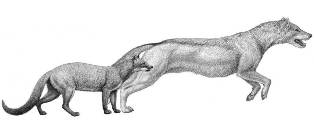
WASHINGTON: Climate change forced dogs to evolve and adapt to their new environments. A new study details the evolution of dog species and how climate change played a role in this evolution.
In a study published Tuesday in Nature Communications, researchers report that based on the analysis of wolf and dog remains dating back to 40 million years ago, it’s likely that the animals developed their unique approach to hunting in response to changes in their habitat.
According to the new study, wolf ancestors developed an important adaptation — a change in their elbows, which turned them from predators that relied on the element of surprise to predators that could chase down their prey with endurance running — along the same timeline as the habitat changes caused by global warming.
You might also like


“It’s reinforcing the idea that predators may be as directly sensitive to climate and habitat as herbivores,” study author Christine Janis, professor of ecology and evolutionary biology at Brown University, said in a statement. The influence of climate change on herbivores — prey animals — has been well documented, and it makes sense that predators would adapt as well. But based on the timing of the adaptations, the researchers say, it seems likely that wolf ancestors were responding directly to the environment, as opposed to responding to the adaptations of their prey.
“There’s no point in doing a dash and a pounce in a forest,” Janis said. “They’ll smack into a tree.”