Customs Today
  • Home
  • Islamabad
  • Karachi
  • Lahore
  • National
  • Transfers and Postings
  • Chambers & Associations
  • Business
No Result
View All Result
Customs Today
  • Home
  • Islamabad
  • Karachi
  • Lahore
  • National
  • Transfers and Postings
  • Chambers & Associations
  • Business
No Result
View All Result
Customs Today
No Result
View All Result
Home Science & Technology Science

How snakes lost their legs?

bySana Anwar
30/11/2015
in Science, Science & Technology
Share on FacebookShare on Twitter

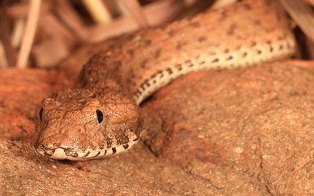
CANADA: A 90-million-year-old snake skull discovered in Argentina shed light on how snakes lost their legs. The widespread belief is that these animals shredded their legs to swim better when they inhabited aquatic settings. The newly unearthed fossil suggested that legs may have been a disadvantage in the animals’ evolution whose ancestors pursued preys in very narrow warrens.

The researchers examined the snake fossil’s inner ear using Computed Tomography (CT). They found that the Dinilysia patagonica, the modern snake’s two-meter long ancient cousin, had a unique structure located in their bony canals and cavities which could help in prey and predator detection. This structure is also found in modern day nestling lizards and snakes but missing in snakes who live above ground or in the water. Snakes use their inner ear for balancing and hearing, which aid them in prey and predator detection.


You might also like

Karachi Port sets 138-year cargo handling record

17/07/2026

Tesla driverless system to use updated radar technology

12/09/2016

The research concluded that the Dinilysia patagonica is the biggest burrowing snake to date and that the species’ burrowing lifestyle preceded modern snakes. The researchers also hypothesized that modern-day crown snakes originated from the burrowing snakes such as the Dinilysia patagonica.

“How snakes lost their legs has been a mystery to scientists but it seems this happened when their ancestors became adept at burrowing,” said Dr. Hongyu Yi, the study’s lead scientist from the School of GeoSciences at the University of Edinburgh. Yi added that fossils’ inner ears are useful sources of information, particularly when the fossils’ exteriors are too delicate or broken.


Related Stories

Karachi Port sets 138-year cargo handling record

byCT Report
17/07/2026

KARACHI: Pakistan's maritime sector has achieved a major milestone as Karachi Port set a new record in its 138-year history...

Tesla driverless system to use updated radar technology

byCT Report
12/09/2016

WASHINGTON: Electric carmaker Tesla announced Sunday it was upgrading its Autopilot software to use more advanced radar technology. In a...

Apple to develop its own self-driving technology

byCT Report
10/09/2016

SAN FRANCISCO: Apple may not become an automaker, but it still wants to develop its own self-driving technology. The iPhone-maker's...

NASA spots slowest known magnetar

byCT Report
10/09/2016

WASHINGTON: Astronomers have found evidence of a magnetar - magnetised neutron star - that spins much slower than the slowest...

Next Post

Humans & birds evolved same system for talking, singing

  • Terms and Conditions
  • Disclaimer

© 2011 Customs Today -World's first newspaper on customs. Customs Today.

No Result
View All Result
  • Transfers and Postings
  • Latest News
  • Karachi
  • Islamabad
  • Lahore
  • National
  • Chambers & Associations
  • Business
  • About Us

© 2011 Customs Today -World's first newspaper on customs. Customs Today.