Customs Today
  • Home
  • Islamabad
  • Karachi
  • Lahore
  • National
  • Transfers and Postings
  • Chambers & Associations
  • Business
No Result
View All Result
Customs Today
  • Home
  • Islamabad
  • Karachi
  • Lahore
  • National
  • Transfers and Postings
  • Chambers & Associations
  • Business
No Result
View All Result
Customs Today
No Result
View All Result
Home International Customs South Africa

How the latest round of load shedding will hit South Africa’s economy

byadmin
12/12/2019
in South Africa
Share on FacebookShare on Twitter

Market research firm Intellidex has published a new report highlighting the impact of load shedding and other recent developments on South Africa’s economy and projected growth.

Head of Capital Markets Research at Intellidex, Peter Attard Montalto, said that load shedding, SAA, fiscal deterioration and ratings are not enough of a threat or a shock to a faster pace of reform within a capacity-constrained state.


You might also like

lamic banking assets reach Rs14.47 trillion, sector share rises to 23%

07/03/2026
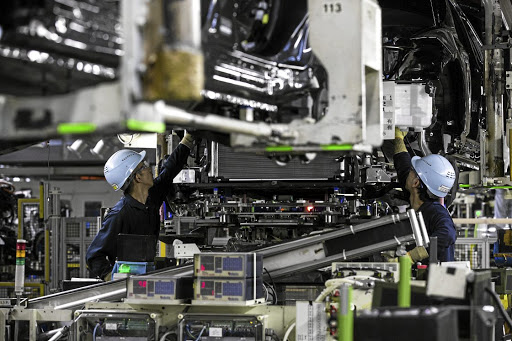
Toyota Motor Corp. employees work on the Crown vehicle production line at the company's Motomachi plant in Toyota City, Aichi, Japan, on Thursday, July 26, 2018. Toyota may stop importing some models into the U.S. if President Donald Trump raises vehicle tariffs, while other cars and trucks in showrooms will get more expensive, according to the automaker’s North American chief. Photographer: Shiho Fukada/Bloomberg

Toyota SA to invest over R4 billion in car assembly and parts

05/02/2020

“As such growth forecasts have fallen since the last reform tracker update even though notional the reform outlook has improved marginally,” he said.

“We now see growth at 0.4% this year, 1.1% next year then 1.5% for 2021 and 1.9% for 2021 (from 0.6%, 1.5%, 1.7% and 1.9% previously) – but with strong downside risks still to these numbers.

“With load shedding now this year could easily fall 0.1% and if load-shedding continues, next year by 0.5% or so.”

Ramaphoria is dead

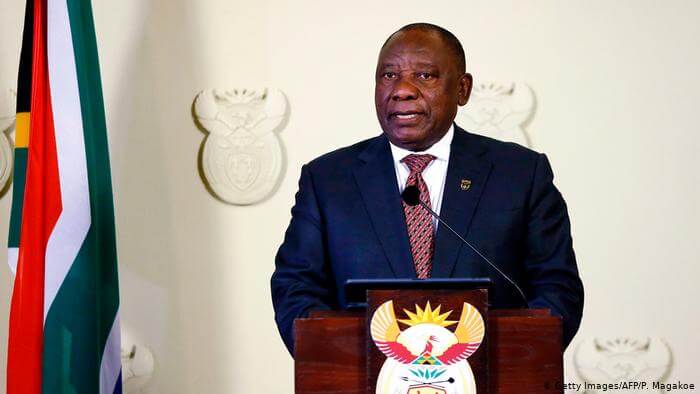
Montalto said that load shedding is not the only major issue facing South Africa, adding that a lack of a large enough team of effective implementers or communicators around the president means that what slow positive change is occurring is getting rapidly lost.

Similarly, negative reforms and delays continue to glue business sentiment to the ground, he said.

“Load shedding is similarly obscuring the slow progress (indeed offsetting it) whilst questions over the future of SOEs and the crisis around both SAA and Eskom and fiscal worries are similarly dampening the mood as attention focuses on the downgrade to come next year if progress continues to fall short.

“Overall it seems not only is Ramaphoria dead – it was never alive, and the long arc of reform potential is being lost in the discourse.”

It is for precisely this reason that Intellidex has always argued reforms in South Africa needed to be much faster, Montalto said.

“All this is causing business to increasingly give government and the President short shrift on social compacting navel-gazing.”

Related Stories

lamic banking assets reach Rs14.47 trillion, sector share rises to 23%

byCT Report
07/03/2026

KARACHI: Pakistan’s Islamic banking sector expanded during 2025, increasing its share in the country’s financial system with assets reaching nearly...

Toyota Motor Corp. employees work on the Crown vehicle production line at the company's Motomachi plant in Toyota City, Aichi, Japan, on Thursday, July 26, 2018. Toyota may stop importing some models into the U.S. if President Donald Trump raises vehicle tariffs, while other cars and trucks in showrooms will get more expensive, according to the automaker’s North American chief. Photographer: Shiho Fukada/Bloomberg

Toyota SA to invest over R4 billion in car assembly and parts

byadmin
05/02/2020

Toyota SA Motors (TSAM) has announced a R4.28bn investment in local vehicle assembly and parts supply. Speaking at the company’s...

Toyota Motor Corp. employees work on the Crown vehicle production line at the company's Motomachi plant in Toyota City, Aichi, Japan, on Thursday, July 26, 2018. Toyota may stop importing some models into the U.S. if President Donald Trump raises vehicle tariffs, while other cars and trucks in showrooms will get more expensive, according to the automaker’s North American chief. Photographer: Shiho Fukada/Bloomberg

Toyota SA to invest over R4 billion in car assembly and parts

byadmin
03/02/2020

Toyota SA Motors (TSAM) has announced a R4.28bn investment in local vehicle assembly and parts supply. Speaking at the company’s...

Massmart warns of almost R1.4bn loss as SA consumers struggle

byadmin
30/01/2020

Walmart-owned retailer Massmart, whose brands include Makro and Game, warned on Thursday it had swung into a loss in its...

Next Post

Ramzan mills case: NAB court extends Hamza Shahbaz's judicial remand till Dec 23

  • Terms and Conditions
  • Disclaimer

© 2011 Customs Today -World's first newspaper on customs. Customs Today.

No Result
View All Result
  • Transfers and Postings
  • Latest News
  • Karachi
  • Islamabad
  • Lahore
  • National
  • Chambers & Associations
  • Business
  • About Us

© 2011 Customs Today -World's first newspaper on customs. Customs Today.