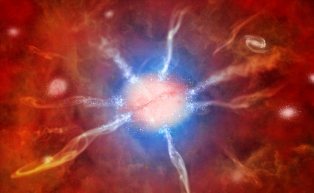


WASHINGTON: Astronomers have uncovered a unique process for how the universe’s largest galaxies continue to producing stars long after their peak years of star birth.
NASA’s Hubble Space Telescope allowed the astronomers to see brilliant knots of hot, blue stars forming along the jets of active black holes found in the centres of giant elliptical galaxies.
Combining Hubble data with observations from a suite of ground-based and space telescopes, two independent teams found that that the black hole, jets, and newborn stars are all parts of a self-regulating cycle.
High-energy jets shooting from the black hole heat a halo of surrounding gas, controlling the rate at which the gas cools and falls into the galaxy.
“Think of the gas surrounding a galaxy as an atmosphere. That atmosphere can contain material in different states, just like our own atmosphere has gas, clouds, and rain,” said Megan Donahue from the Michigan State University.
What we are seeing is a process like a thunderstorm.
“As the jets propel gas outward from the centre of the galaxy, some of that gas cools and precipitates into cold clumps that fall back toward the galaxy’s centre like raindrops,” Donahue added.
The “raindrops” eventually cool enough to become star-forming clouds of cold molecular gas.

Karachi Port sets 138-year cargo handling record
KARACHI: Pakistan's maritime sector has achieved a major milestone as Karachi Port set a new record in its 138-year history...